
 EXPLORE
South Africa is a destination unlike any other on Earth. Often referred to as the « Rainbow Nation, » this southernmost tip of the African continent blends jaw-dropping natural beauty with a complex, resilient history and a vibrant tapestry of cultures. From the jagged cliffs of Cape Point and the sprawling acacia-dotted plains of Kruger National Park to the historic gold mines of Johannesburg and the poignant legacy of the townships, South Africa offers an immersive journey that challenges, inspires, and captivates every traveler.
Whether you are planning your dream vacation or seeking deep insight into what makes this nation tick, this comprehensive guide covers everything you need to know about South Africa’s culture, ethnic diversity, must-visit tourist destinations, and its profound historical connection to mining.
1. The Rainbow Nation: Culture and Heritage
The term « Rainbow Nation » was coined by Archbishop Desmond Tutu to describe post-apartheid South Africa, celebrating the peaceful transition to a multi-ethnic democracy and the harmonious coexistence of different cultural backgrounds. Today, South African culture is a dynamic fusion of indigenous African traditions, European colonial influences, and Asian heritage.
Languages and Diversity
South Africa is officially home to 11 official languages, reflecting its rich multicultural mosaic. These include Zulu, Xhosa, Afrikaans, English, Pedi, Tswana, Sotho, Tsonga, Swati, Venda, and Ndebele. This linguistic diversity is matched only by the country’s culinary traditions.
Food and Drink
South African cuisine is a reflection of its diverse population. A quintessential cultural experience is the braai (barbecue), which is much more than just cooking meat over an open flame—it is a sacred social ritual that brings families and communities together across racial and cultural lines. Other local favorites include:
- Biltong: Cured, dried meat seasoned with spices, perfect for road trips.
- Bobotie: A Cape Malay dish consisting of spiced minced meat baked with an egg-based topping.
- Bunny Chow: A hollowed-out loaf of white bread filled with spicy curries, originating from the Indian community in Durban.
- South African Wine: World-class wines produced in historic regions like Stellenbosch and Franschhoek.
2. A Mosaic of Traditions: The Different Ethnic Groups
South Africa’s population is a rich tapestry of indigenous African communities, descendants of European settlers, and communities with Asian roots. Understanding these ethnic groups provides profound context for the nation’s cultural landscape.
The Zulu People
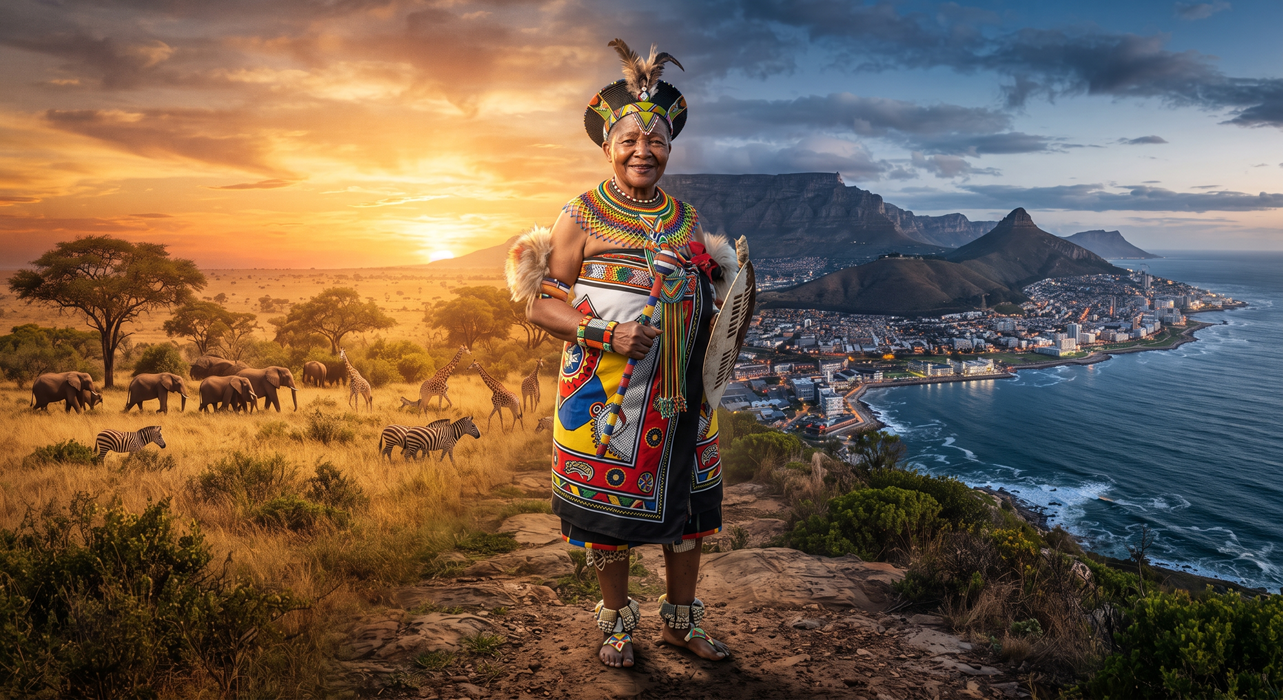
The Zulu nation is the largest ethnic group in South Africa, primarily residing in the KwaZulu-Natal province. Known for their fierce warrior history—exemplified by legendary leaders like King Shaka—the Zulu culture is famous for its intricate beadwork, vibrant traditional attire, and energetic ceremonial dances. Bead colors and patterns often communicate messages regarding courtship, marital status, and social standing.
The Xhosa People
Predominantly living in the Eastern and Western Cape, the Xhosa people are renowned for their distinct click languages (derived from Khoisan influences) and rich storytelling traditions. Nelson Mandela hailed from the Thembu royal family of the Xhosa nation. Traditional Xhosa attire is striking, featuring ochre-dyed blankets and elaborate white beadwork, reflecting deep spiritual connections to ancestors.
The Sotho and Tswana Peoples
The Sotho (Basotho) people, primarily associated with the mountain kingdom of Lesotho and parts of Free State, are famous for their warm wool blankets worn draped over their shoulders to ward off mountain chills, alongside conical straw hats known as mokorotlo. The Tswana people share cultural ties with neighboring Botswana and possess a rich heritage of traditional governance and pastoral farming.
The Afrikaner and English Communities
Descendants of Dutch, German, and French Huguenot settlers who arrived from the 17th century onward form the Afrikaans-speaking community, with a culture rooted in farming traditions, unique architecture (Cape Dutch style), and Afrikaans literature and music. British settlers arrived in large numbers during the 19th century, leaving a lasting imprint on South Africa’s legal, educational, and political systems, particularly in cities like Cape Town and Pietermaritzburg.
The Cape Malay and Asian Communities
Brought to the Cape as political exiles and slaves from Dutch colonies in Indonesia, Malaysia, and India during the colonial era, the Cape Malay community established the colorful Bo-Kaap neighborhood in Cape Town. Furthermore, Durban is home to the largest population of people of Indian descent outside of India, deeply enriching the country’s culinary, religious, and political history (notably where Mahatma Gandhi developed his philosophy of Satyagraha).
3. Iconic Tourist Destinations You Cannot Miss
South Africa is geographically diverse, offering dramatic coastlines, lush winelands, arid deserts, and dense wildlife reserves. Here are the most prominent destinations that draw travelers from around the globe.
Kruger National Park and Greater Kruger
Spanning nearly two million hectares, Kruger National Park is one of Africa’s premier game reserves. It offers world-class wildlife viewing, housing the legendary « Big Five »—lion, leopard, elephant, rhinoceros, and Cape buffalo—alongside hundreds of bird species and diverse flora. Visitors can choose between self-driving experiences or luxury private game reserves in the Greater Kruger area, which offer guided night safaris, bush walks, and exceptional luxury lodges.
Cape Town and the Cape Peninsula
Often ranked among the most beautiful cities in the world, Cape Town is dominated by the majestic, flat-topped Table Mountain. Key highlights include:
- Table Mountain: Accessible via a rotating cable car or challenging hiking trails, offering panoramic views of the city and Atlantic coastline.
- The V&A Waterfront: A bustling hub of shopping, dining, museums, and marine life.
- Cape Point and the Cape of Good Hope: The dramatic southwestern tip of the African continent, where rugged cliffs meet turbulent oceans.
- Boulders Beach: Home to a thriving colony of endangered African penguins.
The Garden Route
Stretching along the southeastern coast from Mossel Bay to Storms River, the Garden Route is a road trip paradise. It features lush indigenous forests, tranquil lagoons, golden beaches, and charming coastal towns like Knysna and Plettenberg Bay. Adrenaline junkies can bungee jump from the Bloukrans Bridge—one of the highest commercial bridge bungee jumps in the world—while nature lovers can explore the subterranean wonders of the Cango Caves in Oudtshoorn.
The Winelands (Stellenbosch and Franschhoek)
Just an hour’s drive from Cape Town lie the rolling vineyards of Stellenbosch, Franschhoek, and Paarl. Nestled against dramatic mountain backdrops, these historic towns offer exquisite wine tastings, world-renowned culinary restaurants, and preserved Cape Dutch architecture. The Franschhoek Wine Tram provides a delightful hop-on, hop-off way to tour estate vineyards.
Drakensberg Mountains
For hikers and outdoor enthusiasts, the Drakensberg range (meaning « Dragon Mountains ») offers soaring basalt cliffs, cascading waterfalls, and prehistoric San rock art sites. It is the highest mountain range in Southern Africa, providing breathtaking trekking routes and sweeping vistas.
4. The Depths of History: Mines and Industrial Heritage
You cannot fully understand South Africa’s modern economy, urbanization, and socio-political struggles without examining its mining history. The discovery of diamonds in Kimberley in 1867 and gold on the Witwatersrand in 1886 transformed South Africa from an agrarian society into an industrial powerhouse, altering the course of world history.
Johannesburg: The City of Gold (Egoli)
Johannesburg, affectionately known as « Jozi » or Egoli (Place of Gold), was born out of the 1880s gold rush. Massive mine dumps and headgears once dominated the city skyline, serving as monuments to the mineral wealth beneath the earth.
- The Apartheid Museum: Located in Johannesburg, this world-class institution chronicles the rise and fall of apartheid, a system deeply intertwined with the labor dynamics of the mining industry.
- Gold Reef City: A theme park built around a genuine 19th-century gold mine, where visitors can descend deep underground into old shafts to experience what life was like for historical miners.
The Kimberley Big Hole
In the Northern Cape, the city of Kimberley is famous for the « Big Hole, » recognized as one of the largest hand-dug excavations in the world. Between 1866 and 1914, tens of thousands of miners dug into the earth using pickaxes and shovels, unearthing millions of carats of diamonds and establishing the foundation for the global diamond giant De Beers. Today, the adjacent Mine Museum offers an immersive look into diamond-mining history.
The Platinum Belt and Modern Mining
While gold and diamond mining have shifted or declined in scale, South Africa remains a global giant in mineral extraction. Regions like Rustenburg in the North West province form the heart of the world’s platinum-group metals production, alongside significant coal, manganese, and chrome mining operations.
While mining fueled rapid modernization, infrastructure development, and economic wealth, it also laid the foundation for the migrant labor system and strict racial segregation that eventually culminated in apartheid. Understanding this dual legacy is essential for anyone wishing to comprehend the soul of modern South Africa.
5. Practical Travel Tips for Your Journey
To ensure a smooth, unforgettable adventure in South Africa, keep these essential travel considerations in mind:
- Best Time to Visit: South Africa is a year-round destination, but the ideal time depends on your itinerary. For wildlife viewing in Kruger, the dry winter months (May to September) offer sparse vegetation and easier animal spotting. For Cape Town and the coast, the warm summer months (November to February) provide glorious beach weather.
- Getting Around: Renting a car is the best way to explore regions like the Garden Route or the Winelands. For longer distances, domestic flights connect major hubs like Johannesburg, Cape Town, and Durban efficiently.
- Safety and Health: While South Africa is an exceptionally rewarding travel destination, basic urban precautions are necessary. Avoid walking alone at night in major city centers, use reputable transport, and heed local advice. In certain regions like Kruger National Park, malaria prophylaxis may be recommended.
- Currency: The South African Rand (ZAR) is the local currency. Credit cards are widely accepted across cities, game lodges, and restaurants, but it is always wise to carry some cash for small markets and tipping.
Conclusion
South Africa is a destination that touches all the senses. From the rhythm of traditional Zulu dances and the poignant historical weight of its mining heritage to the breathtaking vistas of Table Mountain and the untamed wilderness of Kruger National Park, this country offers depth, beauty, and authenticity. It is a place of profound contrasts and remarkable resilience—a nation that welcomes visitors with open arms and leaves an indelible mark on their hearts.

 EXPLORE
 EXPLORE
 EXPLORE
 EXPLORE