
 EXPLORE
Tourism in Brazil: A Journey to the Heart of the South American Giant Between Culture, History, and Major Landmarks
Brazil immediately evokes images of golden beaches, the enchanting rhythms of samba, lush forests, and unparalleled popular fervor. More than just a vacation destination, South America’s largest country is a continent in its own right, a crossroads of civilizations where colonial history, Amerindian traditions, and Afro-Brazilian heritage intertwine daily.
Whether you are planning an eco-tourism getaway, an urban immersion, or a historical exploration, tourism in Brazil promises a complete change of scenery. This comprehensive guide takes you on a discovery of the many facets of this fascinating country, from its tumultuous past to its must-see natural and cultural treasures.
1. History and Culture: The Deep Soul of Brazil
To fully grasp Brazilian tourism, it is essential to examine the genesis of its identity. Brazil’s cultural richness stems directly from its history, marked by miscegenation and the meeting of three major pillars: indigenous peoples, Portuguese colonizers, and African populations torn from their land and reduced to slavery.
Key Historical Milestones
- The Pre-Colonial Era and Discovery (1500): Before the arrival of the Portuguese navigator Pedro Álvares Cabral in April 1500, the territory was populated by hundreds of Amerindian tribes (Tupis, Guaranis, etc.). The exploitation of brazilwood, which gave the country its name, marked the beginning of colonization.
- The Colonial Era and Slavery: The development of immense sugarcane plantations, followed by gold mining in Minas Gerais during the 18th century, shaped the colonial economy through the slave trade. This legacy weighs heavily on the social and cultural structure, particularly visible in the Nordeste.
- From Empire to Republic: Unlike its Hispanic neighbors, Brazil gained independence in 1822 as an Empire led by Dom Pedro I, before becoming a Republic in 1889.
A Vibrant Cultural Mosaic
Brazilian culture is lived out in the streets through music, dance, and gastronomy.
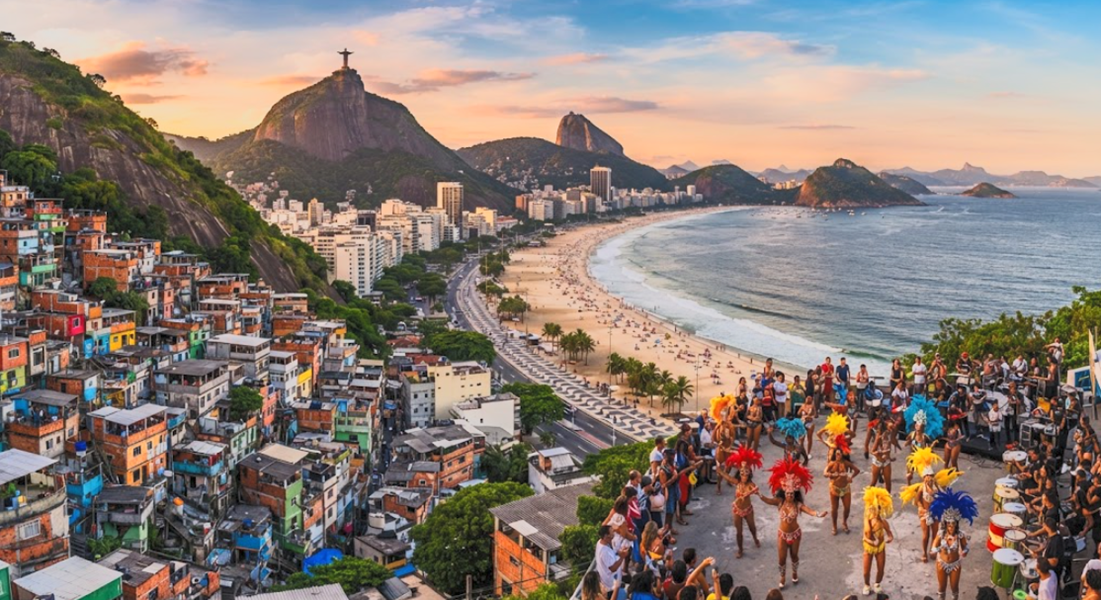
- Music and Dance: From the spirited samba of the Carioca favelas to the gentle bossa nova, passing through the forró of the Northeast, music is the cement of society. Capoeira, a martial art disguised as a dance, testifies to the resistance of enslaved Africans.
- Carnival: A world-renowned cultural event, the Carnival of Rio, Salvador da Bahia, or Olinda transcends social barriers. For several days, the entire country holds its breath to the rhythm of brass bands and spectacular parades.
- Gastronomy: Eating in Brazil is a sensory experience. Taste the famous feijoada (black bean and pork stew), the essential pão de queijo (cheese bread), or the exoticism of açai and Bahian acarajé.
2. Major Landmarks and Must-See Cities
Brazilian territory spans over 8.5 million square kilometers, offering a spectacular diversity of urban and natural landscapes. Here are the flagship stages of any successful trip.
Rio de Janeiro: The « Cidade Maravilhosa »
It is impossible to talk about tourism in Brazil without mentioning Rio de Janeiro. Between sea and mountains, the city captivates with breathtaking panoramas.
- Christ the Redeemer and Sugarloaf Mountain: From atop Corcovado or the summit of Sugarloaf Mountain, the panoramic view of Guanabara Bay is legendary.
- Mythical Beaches: Stroll along the mosaic sidewalks of Copacabana and Ipanema, where the sporting and social heart of the Carioca city beats.
Salvador da Bahia: Cradle of Afro-Brazilian Culture
A former colonial capital, Salvador overflows with color and spirituality.
- The Pelourinho: This historic neighborhood with pastel-colored paved facades, a UNESCO World Heritage site, houses magnificent baroque churches richly decorated with gold. This is where the Afro-Brazilian soul expresses itself with the greatest intensity through pearls, Candomblé, and street performances.
São Paulo: The Economic and Cultural Engine
A sprawling and multicultural megalopolis, São Paulo is a paradise for lovers of art, architecture, and world cuisine. Its top-tier museums (such as MASP), historic district, and vibrant nightlife make it an essential stop for understanding modern Brazil.
Ouro Preto and the Historic Cities of Minas Gerais
A direct dive into the 18th century. Hidden in the verdant mountains, Ouro Preto, Tiradentes, or Paraty (the latter located on the Costa Verde) reveal exceptional colonial heritage, historic gold mines, and masterpieces of baroque art sculpted by the artist Aleijadinho.
3. Natural Wonders: Between Adventure and Eco-Tourism
Brazil is home to a major share of the world’s biodiversity, making it a prime destination for travelers seeking wide-open wild spaces.
The Amazon: The Forest of Forests
The immense Amazon basin represents the largest biodiversity reservoir on the planet. Exploring the Amazon from cities like Manaus or Belém allows you to plunge deep into the heart of the jungle by boat, observe pink river dolphins, caimans, and a thriving canopy, while meeting indigenous communities fighting to preserve their way of life.
Iguaçu Falls: The Power of Water
On the border with Argentina, Iguaçu Falls make up one of the most grandiose natural spectacles in the world. Over 275 cascades roar amid a lush subtropical forest. The walkway leading to the « Garganta del Diablo » (Devil’s Throat) offers a stunning sensory immersion facing the force of water.
The Pantanal: The Kingdom of Wildlife
Denser and more open than the Amazon, the Pantanal is the largest wetland on the planet. It is the best place in Brazil to observe wildlife in freedom: jaguars, capybaras, hundreds of caimans, toucans, and multicolored macaws thrive in their natural habitat.
The Lençois Maranhenses: A Surreal Aquatic Desert
In the north of the country, the Lençois Maranhenses National Park offers a completely unique landscape. During the rainy season, water accumulates between immense white sand dunes, forming thousands of crystal-clear freshwater lagoons where swimming is possible.
4. Practical Tips for a Successful Trip to Brazil
To ensure your stay goes smoothly, good preparation is essential.
- When to go? Brazil is vast and encompasses several climatic zones. Generally speaking, the dry season (May to September) is ideal for visiting the Northeast and the Amazon, while the southern summer (December to March) appeals for beaches and Carnival, although the weather is hotter and more humid.
- Formalities and Safety: For French and European citizens, a valid passport is generally sufficient for a tourist stay of less than 90 days (no visa required). Regarding safety, caution is required in large metropolises: avoid wearing ostentatious valuables and ask locals about which neighborhoods to frequent.
- Language: Portuguese is the official language. Although English is spoken in major hotels and tourist areas, learning a few basics of Portuguese will open doors and greatly facilitate your interactions with Brazilians, who are renowned for their legendary hospitality.
Conclusion
Traveling to Brazil means accepting to be overwhelmed by a unique energy, a subtle blend of melancholy (saudade) and exuberant joy for life. From the shores of the Atlantic to the mysterious depths of the Amazon, through the golden stones of baroque cities, the country offers a rare promise: turning every trip into an unforgettable human and sensory adventure.

 EXPLORE
 EXPLORE
 EXPLORE