
 EXPLORE
South Georgia and the South Sandwich Islands: A Wild Journey to the Edge of the World
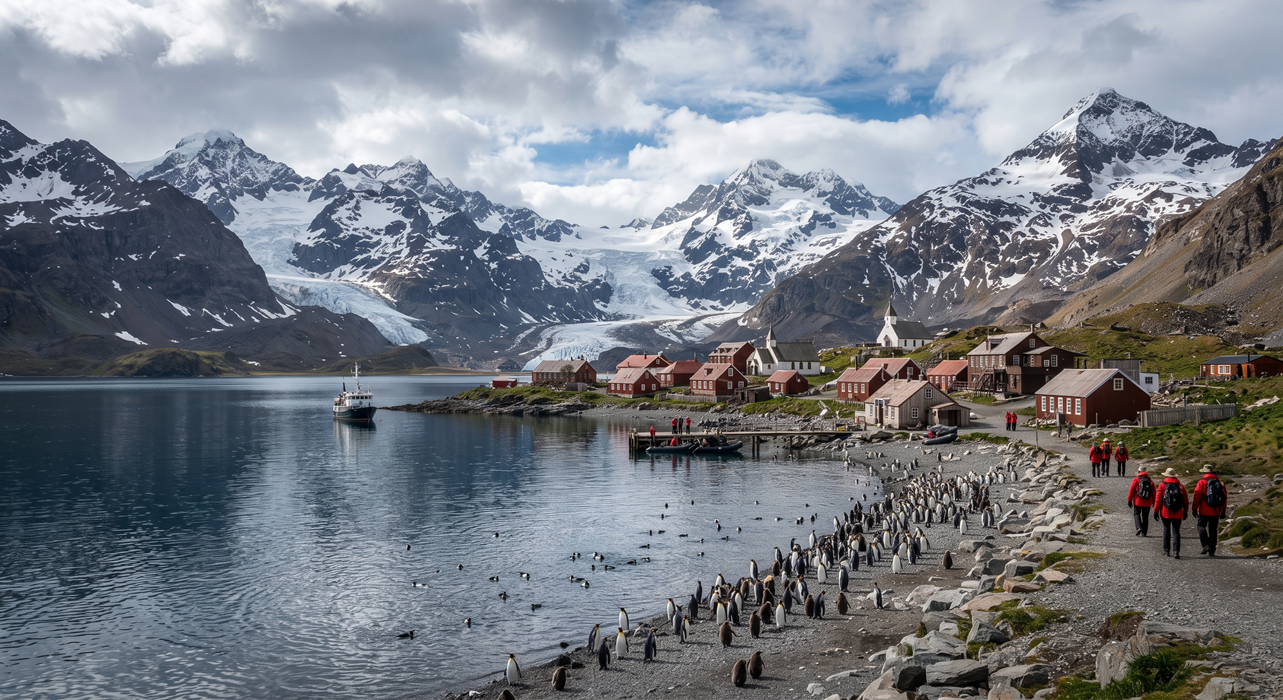
Imagine stepping onto a remote beach where thousands of king penguins gather beneath towering mountains, elephant seals rest on dark volcanic sand, and enormous glaciers descend towards a deep-blue ocean. There are no bustling cities, no crowded shopping streets and no conventional tourist resorts. Instead, there is raw wilderness, remarkable wildlife and a history shaped by explorers, sailors and the unforgiving Southern Ocean.
Welcome to South Georgia and the South Sandwich Islands, one of the most extraordinary destinations on Earth. Located in the South Atlantic Ocean, this British Overseas Territory offers an exceptional combination of spectacular scenery, polar wildlife, maritime heritage and scientific importance.
Visiting these islands is not a typical holiday. It is an expedition into a world where nature dominates every landscape and human presence remains remarkably limited. For adventurous travellers, wildlife enthusiasts, photographers and history lovers, it can be a once-in-a-lifetime experience.
Where Are South Georgia and the South Sandwich Islands?
South Georgia lies approximately 1,300 kilometres southeast of the Falkland Islands, surrounded by the cold, wildlife-rich waters of the Southern Ocean. Its mountainous landscape stretches for roughly 170 kilometres, with glaciers, rugged peaks and sheltered bays creating some of the most dramatic scenery in the sub-Antarctic region.
Further southeast lies the South Sandwich Islands, a remote chain of eleven volcanic islands. Their active volcanic landscapes, icy coastlines and extraordinary marine environment make them among the least visited island groups in the world.
There are no permanent civilian communities across the territory. A small number of government personnel and scientific researchers live and work at designated stations on South Georgia, while the South Sandwich Islands remain uninhabited.
This isolation is precisely what makes the destination so fascinating. However, it also means that travel requires careful planning, specialist transport and respect for strict environmental regulations.
What to See in South Georgia: Landscapes That Take Your Breath Away
King Penguins and Spectacular Wildlife Colonies
For many visitors, the highlight of South Georgia is its extraordinary wildlife. The island is one of the world’s most important breeding grounds for seabirds and marine mammals, offering remarkable opportunities to observe animals in their natural environment.
King penguins are among the most iconic residents. Standing together in enormous colonies, adults display distinctive orange markings around their heads and necks, while fluffy brown chicks create an unforgettable sight.
One of the best-known places to encounter them is Salisbury Plain, a coastal area where a vast penguin colony gathers against a dramatic backdrop of mountains and glaciers. The scale of the colony can be astonishing, particularly during the breeding season.
At St Andrews Bay, visitors may also encounter impressive concentrations of king penguins alongside elephant seals and other wildlife. Conditions and permitted landing arrangements vary, so access depends on the expedition operator, weather and current conservation rules.
The key to enjoying these encounters is patience. Rather than chasing wildlife, travellers should remain still, observe quietly and allow animals to behave naturally.
Elephant Seals and Antarctic Fur Seals
South Georgia is famous for its seal populations. Southern elephant seals, among the largest seals in the world, gather on beaches where males can weigh several tonnes. During the breeding season, their territorial behaviour and powerful calls create an unforgettable spectacle.
Antarctic fur seals are equally fascinating. Once heavily exploited by commercial sealing, their populations have recovered substantially following the end of large-scale hunting.
During the austral summer, beaches can become crowded with seals, making careful movement essential. Visitors must follow official guidance and maintain safe distances, especially around aggressive males and protective mothers.
Glaciers, Mountains and Emerald Bays
South Georgia’s natural beauty extends far beyond its animals. Snow-covered mountains rise above sheltered bays, while immense glaciers carve their way towards the sea.
The island’s dramatic topography provides exceptional scenery for expedition photography. Travellers may see floating ice, waterfalls, rugged cliffs and changing light across the mountains, sometimes all within a single morning.
Gold Harbour is another celebrated landing area, known for its striking coastal scenery and opportunities to observe penguins and seals. Its combination of steep slopes, glacial landscapes and wildlife makes it a memorable stop on many expedition itineraries.
The weather can change rapidly, however. Mist, rain, snow and strong winds are part of the experience, and landing sites may be changed or cancelled for safety reasons.
Grytviken: Discover the History of South Georgia
A Former Whaling Station with a Remarkable Past
Although South Georgia is now internationally recognised for wildlife conservation, its history is closely connected to the whaling industry.
In 1904, Norwegian entrepreneur and captain Carl Anton Larsen established a land-based whaling station at Grytviken. The settlement became a major centre for industrial whaling in the Southern Ocean, attracting workers and sailors from several countries.
The remains of the former station tell a difficult story. Industrial equipment, abandoned structures and other historical traces reveal the scale of an industry that placed enormous pressure on whale populations.
Today, Grytviken is an important heritage site where visitors can learn about the territory’s maritime past and the long-term consequences of commercial exploitation.
Visit the South Georgia Museum
The South Georgia Museum, located in Grytviken, is one of the most interesting cultural attractions in the territory.
Its collections explore the island’s discovery, sealing and whaling industries, scientific research, everyday life at remote settlements and the experiences of polar explorers.
The museum helps visitors understand the human stories behind the dramatic landscape. It also provides important context for South Georgia’s transformation from a centre of industrial exploitation into a place internationally valued for conservation and scientific research.
Museum access depends on the expedition itinerary and local operating arrangements, so it is worth checking with your cruise operator before travelling.
Ernest Shackleton’s Grave
South Georgia occupies a special place in the history of Antarctic exploration because of its connection with Sir Ernest Shackleton.
After the disastrous Endurance expedition, Shackleton and a small group of companions reached South Georgia in 1916 following an extraordinary voyage across the Southern Ocean. Shackleton, Tom Crean and Frank Worsley then crossed the island’s mountainous interior to reach the whaling station at Stromness and seek help for their stranded colleagues.
Their survival story remains one of the great achievements of polar exploration.
Shackleton died aboard his ship, Quest, in 1922 and was buried at Grytviken’s whalers’ cemetery. His grave has become a place of remembrance for explorers, historians and travellers drawn to the spirit of endurance and discovery.
A visit offers a powerful reminder that South Georgia is more than a wildlife destination: it is also a landscape of human courage, hardship and adventure.
The Historic Church at Grytviken
Another notable landmark is the small Norwegian-built church at Grytviken, consecrated on Christmas Day in 1913.
Its simple design and isolated setting contrast with the surrounding mountains and industrial remains. The church reflects the lives of the Scandinavian workers who helped establish the settlement and offers another perspective on the island’s early twentieth-century history.
Together, the church, museum and cemetery make Grytviken one of the most historically significant places in the sub-Antarctic region.
What to Do in South Georgia and the South Sandwich Islands
1. Join a Wildlife Expedition Cruise
For most travellers, an expedition cruise is the most practical way to discover South Georgia. Ships generally travel from the Falkland Islands or as part of longer itineraries connecting the region with Antarctica.
These voyages combine wildlife observation, guided shore landings, photography and expert presentations about local history, geology and conservation.
Unlike conventional cruises, expedition itineraries remain flexible. The captain and expedition team adjust plans according to sea conditions, wildlife activity and landing restrictions.
2. Photograph Penguins, Albatrosses and Whales
South Georgia is a dream destination for wildlife photographers. Beyond its famous penguins and seals, the island supports wandering albatrosses, petrels, cormorants and the endemic South Georgia pipit.
The wandering albatross is particularly impressive, with its enormous wingspan and effortless flight above the waves.
The surrounding waters also attract whales, including humpback and southern right whales. Sightings depend on the season, weather and location, but encountering these giants from an expedition vessel can be one of the most memorable moments of a voyage.
A telephoto lens, spare batteries and protection against moisture are useful for photography in this demanding environment.
3. Explore the South Sandwich Islands
The South Sandwich Islands offer an even more remote experience. Their volcanic peaks, glaciers and exposed coastlines represent one of the least accessible environments in the South Atlantic.
The archipelago is particularly interesting to scientists studying volcanism, oceanography and marine biodiversity. Its waters support important seabird and penguin populations, including large colonies of chinstrap penguins.
However, visits are far less common than those to South Georgia. Landing opportunities are highly dependent on weather, sea conditions, permits and operational feasibility. Travellers should regard the South Sandwich Islands as a possible specialist expedition destination rather than a guaranteed stop.
4. Learn About Conservation and Polar Science
A visit to South Georgia is also an opportunity to discover how fragile ecosystems recover and how scientists study environmental change.
The island has undergone major conservation efforts, including the eradication of invasive rodents and reindeer. These programmes have helped protect native birds and restore habitats.
The British Antarctic Survey operates scientific facilities at King Edward Point and Bird Island, where researchers monitor wildlife and environmental conditions. These stations are working research facilities, not ordinary tourist attractions, and access is restricted.
For environmentally conscious travellers, the island demonstrates why responsible tourism, biosecurity and marine protection are essential in remote ecosystems.
What to Eat: Local Food and Culinary Traditions
One important detail for visitors is that South Georgia and the South Sandwich Islands do not have a conventional local restaurant scene or an established resident culinary culture. There are no permanent civilian towns offering the kind of food markets, cafés and regional restaurants found in more populated destinations.
Instead, food is generally provided aboard expedition ships and yachts. Menus depend on the vessel and operator, but travellers can expect a mixture of international dishes, warming soups, fresh or preserved ingredients, and substantial meals suited to cold-weather exploration.
Dishes and Ingredients to Look Out For
- Fresh fish and seafood: Depending on the ship’s sourcing and menu, fish and seafood dishes may feature in onboard meals. South Georgia’s surrounding waters support carefully managed fisheries, but visitors should not assume that a particular local catch will be served.
- Hearty soups and stews: Warming dishes are particularly welcome after a cold landing or a windy day on deck.
- International comfort food: Expedition vessels commonly serve familiar options such as pasta, roasted meats, vegetables, rice dishes and vegetarian meals.
- Hot drinks and desserts: Tea, coffee, hot chocolate and sweet treats provide a welcome break between wildlife excursions.
There is no authentic South Georgia national dish to seek out, and travellers should be cautious of websites claiming otherwise.
It is also important to remember that protecting the environment takes priority over culinary exploration. Strict biosecurity rules apply to food brought ashore, and visitors must never leave food or rubbish behind.
Are There Cities or Towns in South Georgia?
There are no conventional cities or permanent civilian towns in the territory. Nevertheless, several locations have historical or scientific importance.
Grytviken is the best-known former settlement and the principal historical stop for many visitors. Its whaling station, museum, church and cemetery preserve the memory of an earlier era.
King Edward Point, near Grytviken, is an administrative and scientific station where government personnel and researchers work. It is not an open town, and buildings are generally closed to visitors unless permission is granted.
Stromness is another former whaling station, famous for its connection with Shackleton’s rescue expedition. It is a historically significant site, but access is controlled and visitors must follow current landing rules.
Bird Island, off the northwestern tip of South Georgia, is an important scientific research location and a major wildlife habitat. Its research station is not a tourist settlement.
These places are best understood as historic sites, research locations and expedition destinations rather than towns with everyday public services.
When Is the Best Time to Visit South Georgia?
The main visitor season falls during the Southern Hemisphere’s spring and summer, broadly from October to March.
- October to November: Spring conditions bring returning wildlife and the beginning of the breeding season for some species. Snow and ice can remain extensive.
- December to January: Summer offers long daylight hours and opportunities to observe active wildlife colonies, including penguin chicks later in the season.
- February to March: Late summer can offer excellent wildlife encounters, with seal activity and changing penguin-colony behaviour providing further photographic opportunities.
Wildlife activity varies by species, and no month guarantees a particular sighting. Sea conditions and weather can also significantly affect expedition schedules.
For many travellers, December and January are attractive months because of the long daylight hours and busy wildlife season. However, the best departure depends on the animals you most want to see and the itinerary available.
How to Get to South Georgia and the South Sandwich Islands
There are no scheduled commercial passenger flights to the territory and no public airport for ordinary tourist arrivals. Visitors reach the islands by sea, usually aboard expedition cruise ships or private yachts.
Many expedition voyages depart from the Falkland Islands or incorporate South Georgia into a longer Antarctic journey. Reaching the territory can involve several days at sea, and the Southern Ocean is known for challenging conditions.
Advance planning is essential. Visitors must comply with the territory’s entry regulations, and vessel operators are responsible for submitting the required visit notifications and meeting applicable permit requirements.
Before booking, check the official South Georgia and South Sandwich Islands Government website for current entry requirements, visitor guidance and biosecurity procedures.
There is no visitor accommodation ashore, so travellers should arrange their accommodation and meals aboard their vessel. Independent travel without a properly organised vessel is not a realistic option for most visitors.
Responsible Tourism: Protecting a Fragile Paradise
South Georgia’s wildlife and landscapes are extraordinary partly because the ecosystem is relatively intact. Protecting that environment is therefore central to every visit.
Visitors must follow official wildlife-distance rules, use only authorised landing sites and comply with biosecurity procedures. Boots, clothing and bags must be checked and cleaned as required to prevent seeds, insects and other non-native organisms from spreading.
Never feed animals, approach wildlife too closely, remove natural objects or leave rubbish behind. Even a seemingly harmless action can damage an environment that has evolved in isolation.
Strict regulations also apply to drones, camping and other activities. Travellers should confirm the current rules with their expedition operator well before departure.
Responsible tourism is not simply a recommendation here: it is an essential condition for protecting the islands for future generations.
Practical Travel Tips Before You Go
A successful South Georgia expedition begins with realistic expectations and careful preparation.
- Pack for polar weather: Bring waterproof outerwear, insulating layers, warm gloves, a hat and sturdy footwear suitable for approved landings.
- Prepare for rough seas: If you are prone to motion sickness, discuss suitable precautions with a healthcare professional before departure.
- Choose an experienced operator: Look for an expedition company familiar with local regulations, wildlife protection and safe shore landings.
- Allow flexibility: Weather may delay departures, change landing locations or prevent some activities entirely.
- Plan your budget carefully: Remote expedition travel is typically expensive because of specialist vessels, long voyages and complex logistics. Obtain a full quotation before booking.
- Check entry rules and insurance: Confirm permit requirements, cancellation conditions, medical coverage and emergency evacuation provisions.
- Travel with realistic expectations: There are no conventional hotels, shopping districts or public transport networks. The experience is about wilderness, wildlife and exploration.
Why South Georgia and the South Sandwich Islands Belong on Your Travel Bucket List
South Georgia and the South Sandwich Islands offer a rare kind of travel experience: one in which the natural world remains firmly in control.
From enormous king penguin colonies and dramatic glaciers to the poignant history of Grytviken and Ernest Shackleton, South Georgia combines wildlife, adventure and human history in a remarkable setting.
The remote South Sandwich Islands add another dimension, with volcanic landscapes and extraordinary marine environments that few travellers ever witness.
This is not a destination for those seeking convenience, luxury resorts or a packed urban itinerary. It is for travellers willing to cross remote seas, adapt to unpredictable weather and experience one of the world’s most remarkable wilderness areas with care and respect.
For wildlife lovers, photographers, polar-history enthusiasts and adventurous explorers, South Georgia and the South Sandwich Islands may be one of the most unforgettable journeys on Earth.
Sometimes, the greatest travel experiences are not found in busy cities or famous tourist resorts. They are found at the edge of the world, where penguins gather beneath towering mountains, glaciers meet the ocean and nature tells a story far older than our own.

 EXPLORE
 EXPLORE
 EXPLORE
 EXPLORE