
 EXPLORE
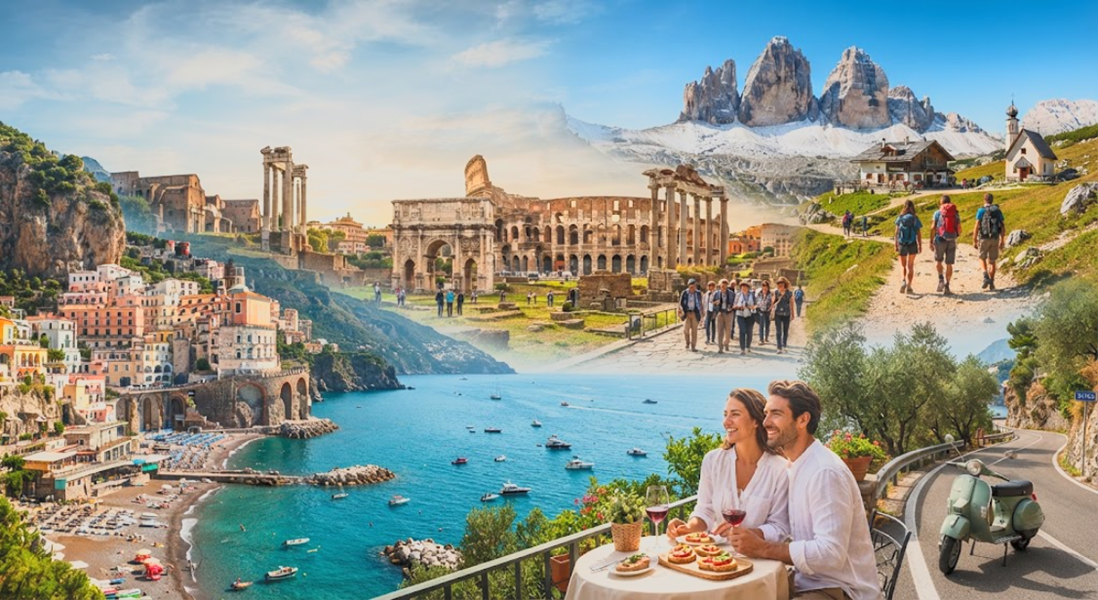
Italy is one of those rare destinations that immediately awaken the senses. Between the scent of espresso drifting from sunny terraces, the golden glow of sunsets over the Mediterranean Sea, the gentle lapping of gondolas on Venetian canals, and the infinite richness of its artistic heritage, the land of the Dolce Vita captivates millions of travelers from all over the world every year.
Unlike other destinations where tourism is reduced to a simple summer getaway, Italy is a total experience. It is lived, tasted, contemplated, and heard. Whether you are an art lover, a gastronomy enthusiast, an avid hiker, or simply looking for relaxation by the water, the Italian territory offers a rare diversity.
In this comprehensive SEO-optimized article, discover the keys to a successful trip, the must-see regions to visit, and the secrets to immersing yourself in the Italian way of life.
Why is Italy the Ultimate Tourism Destination?
It is impossible to discuss global tourism without mentioning the Boot. Italy is home to the highest concentration of UNESCO World Heritage sites. From the grandiose ruins of ancient Rome to the masterpieces of the Florentine Renaissance, every region is an open-air history book.
However, what makes Italy truly unique is its art of living. Traveling here means accepting to slow down the pace. It is understanding the meaning of sprezzatura—the art of making sophistication look effortless, whether tying a cashmere scarf or cooking a fresh pasta dish elevated by three flawless ingredients.
Must-See Regions and Cities to Visit
For a first trip or to deepen your exploration, certain stops stand out as obvious choices. Here are the country’s finest tourist gems.
1. Rome, the Eternal City
A vibrant capital and living museum, Rome is best explored on foot. Every street corner reveals a baroque fountain, a sumptuous church, or millennial ruins.
- The Must-Sees: The Colosseum, the Roman Forum, the Pantheon, the Trevi Fountain (where tradition dictates tossing a coin to ensure a return), and Vatican City with St. Peter’s Basilica and the Sistine Chapel.
- Travel Tip: Take the time to stroll through the picturesque Trastevere neighborhood at the end of the day to dine in a traditional trattoria.
2. Florence and Tuscany
As the birthplace of the Renaissance, Florence concentrates an extraordinary density of art. The city exudes elegance and creativity.
- The Must-Sees: The Duomo (Santa Maria del Fiore) with its massive dome designed by Brunelleschi, the Uffizi Gallery (housing works by Botticelli, Leonardo da Vinci, and Michelangelo), and the Ponte Vecchio spanning the Arno River.
- Surrounding Tuscany: Rent a car to explore the rolling hills of the Val d’Orcia, the vineyards of Chianti, and the medieval cities of Siena, San Gimignano, and Pisa.
3. Venice, the Serene Republic
Incomparable and suspended out of time, Venice is a lagoon city built on over a hundred islands. Quintessentially romantic, it is navigated on foot through a maze of alleys and arched bridges, or via water on a vaporetto.
- The Must-Sees: St. Mark’s Square and its sumptuous basilica, the Doge’s Palace, the Rialto Bridge, and the colorful islands of Burano (famous for its brightly hued fishermen’s houses) and Murano (the capital of glass art).
- Travel Tip: Venture away from the ultra-touristy areas to discover the quiet of the residential canals in the Dorsoduro or Cannaregio sestieri.
4. Milan and the Northern Lakes
Milan embodies the modern, dynamic, and elegant face of Italy. As the global capital of fashion and design, the Lombard metropolis captivates with its energy and avant-garde architecture.
- Must-Sees in Milan: The magnificent white marble Milan Cathedral (Duomo), the famous Galleria Vittorio Emanuele II, and Leonardo da Vinci’s The Last Supper housed in the Church of Santa Maria delle Grazie.
- The Italian Lakes: Less than an hour’s drive away, Lake Como, Lake Maggiore, and Lake Garda offer fairytale settings featuring crystal-clear waters, sumptuous villas, and lush botanical gardens.
5. Naples and the Amalfi Coast
Southern Italy presents a more exuberant, passionate, and sun-drenched side. Bustling and authentic Naples is the historic birthplace of Neapolitan pizza.
- The Must-Sees: The National Archaeological Museum of Naples, the grandiose site of Pompeii preserved by the eruption of Vesuvius, and the spectacular Amalfi Coast.
- The Amalfi Coast: Vertically plunging cliffs meeting the Tyrrhenian Sea, dotted with postcard villages like Positano, Amalfi, and Ravello. Do not miss the nearby island of Capri and its famous Blue Grotto.
Living the Dolce Vita: Gastronomy and Culture
One cannot discuss tourism in Italy without addressing gastronomy. Italian cuisine is among the most popular in the world, yet it varies radically from one region to another.
The Pillars of Italian Cuisine
- The North: Butter, rice (for creamy risottos), braised meats, aged cheeses like Parmigiano Reggiano and Gorgonzola, and robust wines like Barolo take center stage.
- The Center (Tuscany, Lazio): This is the realm of exceptional beef steak (fiorentina), simple yet flawless pastas (cacio e pepe, authentic carbonara without cream), and fruity olive oils.
- The South and Islands: Olive oil, sun-drenched tomatoes, Sicilian citrus, fresh seafood, and chili peppers reign supreme. Not to mention Neapolitan pizza, inscribed on UNESCO’s intangible cultural heritage list.
Everyday Art of Living
Adopting the Italian rhythm means taking time for an aperitivo at sunset (a glass of Spritz or Prosecco accompanied by a few antipasti), stopping at a bar to drink your coffee standing up at the counter (to avoid the terrace surcharge), and partaking in the passeggiata—the traditional evening stroll with family or friends along the main corso.
Practical Tips for a Successful Trip to Italy
To ensure your vacation goes smoothly, here are some essential recommendations:
- When is the best time to visit? The shoulder seasons—spring (April to June) and autumn (September to October)—are ideal. Temperatures are mild, the light is stunning for photography, and tourist crowds are significantly lower than during July and August, which can be stifling and heavily congested.
- How to get around? The Italian railway network (notably high-speed trains like Frecciarossa and Italo) is efficient, fast, and connects major cities (Rome, Florence, Milan, Venice, Naples) seamlessly. For exploring rural areas, natural parks, or small villages in Tuscany and Puglia, renting a car remains the most flexible option.
- Book in advance: Certain must-see sites sell out weeks or even months ahead (such as the Colosseum in Rome, the Uffizi Gallery in Florence, or The Last Supper in Milan). Plan your itinerary early to reserve skip-the-line tickets online.
- Respecting local codes: When visiting churches and religious buildings (cathedrals, basiliques), ensure you wear modest attire covering your shoulders and knees. Also, remember to validate your tickets at station machines before boarding regional trains to avoid fines.
Conclusion
Italy is much more than a simple vacation destination: it is a true emotional and sensory immersion. Whether admiring a sunset over the Dolomites, tasting fresh pasta prepared according to a recipe passed down through generations, or getting lost in the history-laden alleys of a millennial city, every traveler finds a personal resonance within it. Pack your bags, open your eyes wide, and let yourself be carried away by the timeless magic of the Boot. Buon viaggio!

 EXPLORE
 EXPLORE
 EXPLORE