
 EXPLORE
Travel Guide to China: Millennia-Old Traditions, Futuristic Megacities, and Untamed Nature
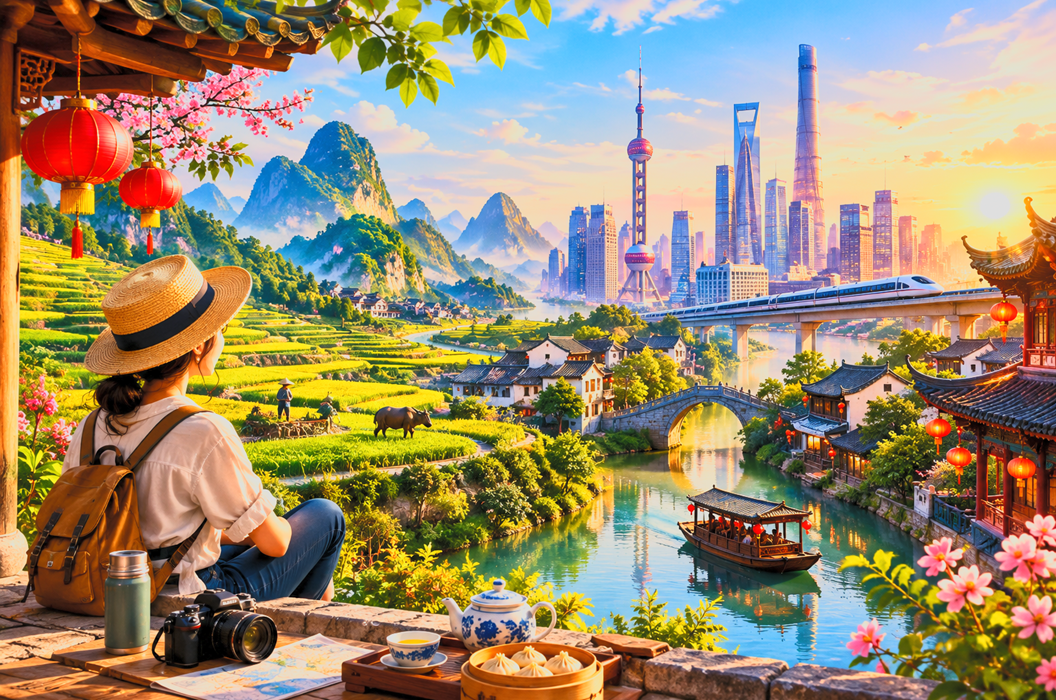
Stepping into China is more than a geographical journey; it is a true voyage through time. As the third-largest country in the world by landmass, the Middle Kingdom offers an incredibly diverse array of tourist experiences. From the majesty of the Great Wall to the neon-lit skyscrapers of Shanghai, and from the surreal peaks of Zhangjiajie to the ancient rice terraces of Guilin, the country presents a striking contrast between a thousands-of-years-old cultural heritage and rapid modernization.
Whether you are a history enthusiast, a fan of futuristic metropolises, or a traveler seeking wild escapism, this comprehensive guide will help you prepare for your adventure in the heart of this fascinating nation.
1. Must-Visit Landmarks: Dive Deep into Chinese Heritage
For a first-time trip to China, certain locations perfectly embody the country’s spirit and tell the foundational stories of its history.
Beijing: The Historical and Cultural Heart
As the political and cultural capital, Beijing is an absolute must. The city is home to the world-renowned Forbidden City, a massive palace complex that housed 24 emperors during the Ming and Qing dynasties. Walking through its vast courtyards and admiring its yellow glazed-tile roofs allows you to grasp the sheer power of ancient imperial rule.
Nearby, Tiananmen Square and the Summer Palace, with its tranquil Kunming Lake and beautifully landscaped gardens, offer different perspectives on Beijing’s grandeur. To capture the everyday soul of the capital, take a stroll through the hutongs—traditional alleyways lined with courtyard houses (siheyuan)—where urban hustle gives way to a gentle, local way of life.
The Great Wall: A Unique Architectural Marvel
Snaking for thousands of miles across mountain ridges, the Great Wall of China is one of humanity’s most iconic monuments. Easily accessible from Beijing, the Mutianyu section offers an excellent balance between careful restoration and spectacular scenery. For a wilder, less crowded experience, the Jinshanling or Simatai sections are perfect for hiking enthusiasts seeking authentic, breathtaking panoramas.
Xi’an: The Cradle of Chinese Civilization
The ancient imperial capital and starting point of the Silk Road, Xi’an holds one of the 20th century’s most awe-inspiring archaeological discoveries: the Terracotta Army. Over 8,000 life-sized statues of soldiers, horses, and chariots stand guard over the tomb of China’s first emperor, Qin Shi Huang. Xi’an also charms visitors with its perfectly preserved medieval city walls—which are wide enough to cycle across—and its vibrant Muslim Quarter, filled with enticing aromas and street food delights.
2. The China of Tomorrow: Modernization and Hyper-Connected Hubs
Traveling in China today also means experiencing a spectacular leap into the future. Rapid urbanization and technological innovation have shaped cityscapes unlike anywhere else on Earth.
Shanghai: The Showcase of Modern China
Divided by the Huangpu River, Shanghai perfectly illustrates the country’s duality. On one side, the Bund reveals neoclassical and Art Deco buildings reminiscent of the 1930s. On the other, the Pudong district boasts a futuristic skyline dominated by the Shanghai Tower, the second-tallest building in the world. As night falls, this forest of skyscrapers lights up in a mesmerizing visual spectacle.
Chongqing: The Cyberpunk Megacity
Built on steep mountainous terrain at the confluence of the Yangtze and Jialing rivers, Chongqing is the most visually striking metropolis in inland China. Often called the « 3D City, » it astounds visitors with its multi-layered architecture—subway trains literally pass through residential buildings, and a public square might actually be sitting on the 20th floor of a skyscraper. At night, the Hongyadong complex, clinging to a cliffside and bathed in golden light, looks like a set straight out of a sci-fi movie.
Shenzhen: The Capital of Tech and Innovation
In just a few decades, Shenzhen transformed from a humble fishing village into Asia’s very own Silicon Valley. Famous for its sprawling electronics markets like Huaqiangbei, its green parks, and avant-garde architecture, the city embodies the creative energy and economic drive of China’s youth.
3. Nature and Escapism: The Enchanting Landscapes of the Middle Kingdom
Far from the metropolitan bustle, China boasts exceptional nature reserves where serenity and scenic beauty inspire deep meditation.
Guilin and Yangshuo: The Poetry of Karst Peaks
Cruising down the Li River between Guilin and Yangshuo offers one of the most beautiful natural sights in Asia. Sugarloaf karst mountains rise dramatically through the morning mist, framed by bamboo groves and rural scenes that have remained unchanged for centuries. By renting a bicycle or an electric scooter in Yangshuo, you can easily lose yourself among the rice paddies and traditional farming villages.
Zhangjiajie: The « Avatar » Mountains
Located in Hunan province, the Zhangjiajie National Forest Park is famous for its thousands of sandstone pillars reaching into the sky—the direct inspiration for the floating mountains in the movie Avatar. Take the world’s longest cable car up Tianmen Mountain, or brave the glass-bottomed skywalks suspended over the abyss for an adrenaline-fueled encounter with spectacular nature.
Yunnan: Lands of Diversity and Serenity
Bordering Southeast Asia and Tibet, Yunnan province offers unmatched geographic and cultural diversity. Explore the UNESCO-listed Old Town of Lijiang, wander the peaceful streets of Dali along the shores of Erhai Lake, or dive into Tibetan culture in Shangri-La. For outdoor lovers, trekking through Tiger Leaping Gorge—one of the deepest canyons in the world—is an unforgettable adventure.
4. The Traveler’s Practical Guide: Essential Tips for China
Organizing a trip to China requires a bit of logistical preparation to ensure a smooth and enjoyable stay.
When to Visit China?
Given the vastness of the territory, the climate varies wildly from region to region:
- Spring (April to June): An ideal time for the whole country. Temperatures are mild, and nature is in full bloom.
- Autumn (September to November): Widely considered the best season to travel. The skies are usually clear, the weather is comfortable, and autumn foliage magnifies the beauty of natural sites.
- Avoid the « Golden Weeks »: The first week of October (National Day) and the Chinese New Year (January/February) see hundreds of millions of locals traveling simultaneously, leading to price surges and extremely overcrowded attractions.
Visas and Exemptions
Entry rules are constantly evolving to facilitate tourism. Several nationalities currently enjoy visa-free entry for short stays or visa-free transits in major cities. Always check the latest entry requirements with Chinese consular authorities before booking your trip.
Getting Around: The High-Speed Rail Revolution
China boasts the most extensive high-speed rail network in the world. High-speed trains (Gaotie) are exceptionally punctual, modern, and highly comfortable. They can connect Beijing to Shanghai in just 4.5 hours and effortlessly link major tourist hubs, saving you the hassle of domestic flights.
Payments and Must-Have Apps
China is essentially a cashless society where traditional bank cards and physical money are rarely used in daily life. Everything is managed via smartphones:
- Mobile Payments: Set up Alipay or WeChat Pay before departure and link them to an international credit card. These apps are absolutely essential for paying for meals, transport, and everyday purchases.
- Navigation and VPNs: Because major Western internet services are blocked on local networks, it is highly recommended to use an international eSIM with data roaming or install a reliable VPN prior to arrival to maintain access to your usual apps. For getting around the cities, use local map applications that work offline.
Living the Authentic Chinese Experience
Traveling to China is about much more than checking landmarks off a map. It’s about immersing yourself in an infinitely rich culinary lifestyle—from Cantonese dim sum to Peking duck and spicy Sichuan hotpot. It’s about watching the elderly practice Tai Chi at sunrise in urban parks, only to witness a technological ballet of autonomous vehicles that same evening. China offers a delicate balance between absolute escapism, a high sense of safety, and a warm welcome from its people. A journey to these lands leaves you with unforgettable memories and a fresh perspective on the world.


 EXPLORE

 EXPLORE
 EXPLORE

 EXPLORE