
 EXPLORE
Kenya is far more than just a travel destination; it is the beating heart of East Africa, a country where wild nature reigns supreme and ancient traditions stand side-by-side with the dynamism of modern metropolises. A land of breathtaking contrasts, Kenya offers a dizzying diversity of landscapes, ranging from the snow-capped peaks of Mount Kenya to the endless savannas of the Masai Mara and the turquoise waters of the Indian Ocean.
Whether you are an adventurer seeking the perfect Kenya safari, a lover of authentic cultures, or an epicurean eager to discover new flavors, this country promises an unforgettable experience. This comprehensive, SEO-optimized guide takes you on a journey to discover Kenya’s major cities, must-see tourist spots, cultural richness, and gastronomy.
Major Kenyan Cities: Between Modernity and History
Exploring Kenya inevitably involves visiting its urban centers—vibrant crossroads where African, Arab, Indian, and European influences blend seamlessly.
Nairobi: The Vibrant, Green Capital
As the main gateway for most travelers, Nairobi is the country’s largest city, boasting nearly 3 million inhabitants. A major economic hub in Africa, it stands out for a unique global feature: it harbors a national park within its city limits. Against the backdrop of Central Business District (CBD) skyscrapers, visitors can spot lions, leopards, and cheetahs roaming the plains. The Karen neighborhood offers a deep dive into local culture and colonial history, while the famous Giraffe Centre allows you to get up close to endangered Rothschild’s giraffes and support their conservation. Nairobi is a metropolis that never sleeps, featuring a lively culinary and nightlife scene—perfect for sampling street food or strolling through colourful Masai market stalls.
Mombasa: The Jewel of the Indian Ocean
Kenya’s second-largest city, Mombasa, is a spellbinding coastal port city founded in the 10th century. Located on the coast, it charms visitors with its rich Swahili heritage and exotic atmosphere. The winding alleys of the Old Town, colonial remnants, Arab architecture, and silver-domed mosques bear witness to its fascinating history as a major maritime trading hub. It is also the ideal starting point to explore Mombasa Marine National Park (renowned for coral reefs and sea turtles) or unwind on the white sands of Nyali and Bamburi beaches.
Kisumu: Lake Victoria’s Hidden Gem
To the west lies Kisumu, Kenya’s third-largest city. Far from Nairobi’s hustle and bustle, Kisumu offers a peaceful haven on the shores of the legendary Lake Victoria. It is a prime destination for immersing yourself in the culture of the Luo ethnic group, one of the country’s most influential communities. Travelers flock here to admire spectacular sunsets over the lake, visit the Impala Sanctuary, or explore the lively Dunga Beach fishing village.
Lamu: A Journey Back in Time
Though smaller, the island of Lamu—part of the namesake archipelago on Kenya’s northern coast—is an absolute must-visit. A UNESCO World Heritage site, this ancient Swahili settlement is a maze of narrow streets entirely free of cars; people travel on foot, by donkey, or aboard traditional dhow boats. Surnamed « little Zanzibar, » Lamu enchants visitors with its preserved architecture, historic fort, and pristine beaches like Shela Beach.
Safaris and Must-See Attractions: What to Do in Kenya?
Kenya is the birthplace of the safari. Its 26 national parks, 35 reserves, and various conservancies shelter an exceptionally rich wildlife population.
The Masai Mara National Reserve
The Masai Mara is undoubtedly Kenya’s most famous park, named after the Maasai people and the Mara River that winds through it. Every year, it hosts one of the planet’s greatest natural spectacles: the Great Migration. Millions of wildebeest, zebras, and antelopes brave crocodile-infested rivers in search of fresh grazing grounds. Beyond spotting the iconic « Big Five » (lions, leopards, elephants, rhinos, and buffaloes), floating over the savanna in a hot-air balloon at sunrise remains the ultimate safari experience.
Amboseli National Park and Mount Kilimanjaro
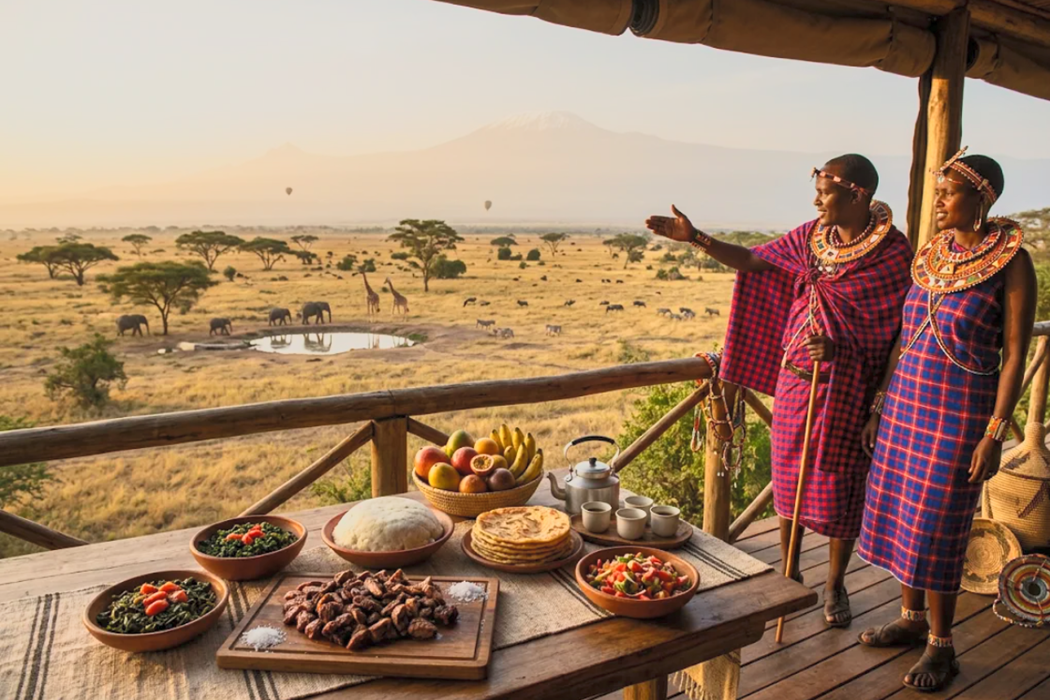
Located near the Tanzanian border, Amboseli offers one of Africa’s iconic postcard views: vast herds of elephants roaming majestically against the backdrop of Mount Kilimanjaro’s snow-capped peak (rising to 5,895 meters). It is a photographer’s paradise and an incredible sanctuary for elephant viewing.
Lake Nakuru and the Great Rift Valley
The Great Rift Valley, a massive geological trench running through the country, is home to a fascinating network of lakes. Lake Nakuru National Park is world-famous for the thousands of flamingos feeding on its algae, creating a brilliant pink fringe along the shore. It is also a tightly protected sanctuary for rare white and black rhinos, as well as leopards lounging in acacia trees. Nearby Lake Naivasha offers boat safaris right among hippos and fish eagles.
Tsavo National Park (East and West)
Covering an immense area, Tsavo represents true wild wilderness. Tsavo East is famous for its red-earth landscapes, the Galana River, Lugard Falls, and its striking « red elephants » that dust themselves in iron-rich soil. Tsavo West, more hilly and volcanic, provides excellent opportunities for spotting big cats and black rhinos around Mzima Springs.
Mount Kenya and Trekking
For hiking and mountaineering enthusiasts, scaling Mount Kenya—the second-highest peak in Africa—is a wilder, less crowded alternative to Kilimanjaro. Revered by local communities, its jagged snowy peaks, tarns, and dense high-altitude forests deliver breathtaking panoramas for trekkers.
Diani Beach and the Kenyan Coast
After the dusty savanna, nothing beats the Indian Ocean. Diani Beach, located south of Mombasa, has repeatedly been voted Africa’s best beach destination. Its powdery white sand, swaying palm trees, and turquoise lagoon protected by a coral reef make it a haven for scuba diving, snorkeling, and kitesurfing.
A Deep Dive into Kenyan Culture
Kenya is a vibrant human mosaic comprising over 40 distinct ethnic groups, each contributing to the national identity.
The Maasai are undoubtedly the most iconic tribe. These semi-nomadic pastoralists, draped in red shúkàs and adorned with intricate beadwork, have preserved their ancestral customs for centuries. Visiting a manyatta (traditional Maasai village) provides insight into their lifestyle in harmony with nature and offers a chance to witness their famous jumping dances (adumu).
However, Kenya is far more than just the Maasai. The Kikuyu, the country’s largest ethnic group, have deeply shaped Kenya’s agriculture and political history. Along Lake Victoria, the Luo people maintain rich fishing traditions and oral storytelling heritage.
On the coast, Swahili culture presents a completely different ambiance. Born from centuries of trade between indigenous Bantu populations and Arab, Persian, and Indian merchants, this culture is reflected in ornate architecture (carved wooden doors), a poetic language (Kiswahili, an official language alongside English), and a predominantly Muslim heritage that contrasts with the Christian-majority interior.
Kenyan Gastronomy: A Feast of Flavors
Kenyan cuisine is hearty, welcoming, and deeply rooted in local ingredients. It draws inspiration from various ethnic traditions, colonial influences, and Indian Ocean trade routes.
Essential National Dishes
- Ugali: The cornerstone of Kenyan dining. This thick, dense porridge made from white cornmeal cooked in water accompanies almost every meal. Eaten by hand, it is used to scoop up rich stews and leafy greens, such as the famous Sukuma Wiki (braised collard greens or kale).
- Nyama Choma: The ultimate national staple, Nyama Choma consists of wood-fired grilled meat (typically goat, beef, or chicken). Marinated simply with salt, garlic, ginger, and lemon, it is shared during festive social gatherings and traditionally served with Kachumbari, a fresh salad of diced tomatoes, onions, and chili.
Regional Specialties
- Kikuyu Irio: Hailing from the Kikuyu highlands, this comforting mash combines potatoes, green peas, corn, and green bananas. Often served at weddings, it highlights the abundance of highland agriculture.
- Githeri: A wholesome highland stew made by slow-cooking corn and beans together with tomatoes, onions, and spices. Rich and nourishing, it is a daily home-cooked classic.
- Coastal Swahili Cuisine: Along the coast around Mombasa and Lamu, flavors transform under Indian and Arab influences. Coconut milk, cloves, cumin, and saffron take center stage. Must-try dishes include Pilau (spiced rice cooked with meat) and Biryani, along with fresh seafood caught daily. Sweet snacks like Mandazi (cardamom-infused fried dough) pair perfectly with Kenyan chai tea.
Practical Tips for a Successful Trip
To plan the ideal journey to Kenya, timing is key. If your goal is to witness the Great Migration in the Masai Mara, the best window is between July and October, when wildlife concentrates near water sources. For combining comfortable game drives with a relaxing beach holiday on the Swahili coast, the dry season from December to February offers ideal temperatures. Be sure to pack lightweight clothing for savanna days, a good camera, and warmer layers for high-altitude evenings and early morning safaris.
A journey to Kenya promises perpetual wonder. From the adrenaline of spotting lions on safari to the tranquility of white-sand beaches and the warm hospitality shared over a plate of Nyama Choma, Kenya leaves an indelible mark on every traveler’s heart.


 Buy on Amazon FR


 EXPLORE
 EXPLORE
 EXPLORE

 SPOTLIGHT