
 EXPLORE
Mexico Travel Guide: From Maya Pyramids to Caribbean Beaches, Culture, and Cuisine
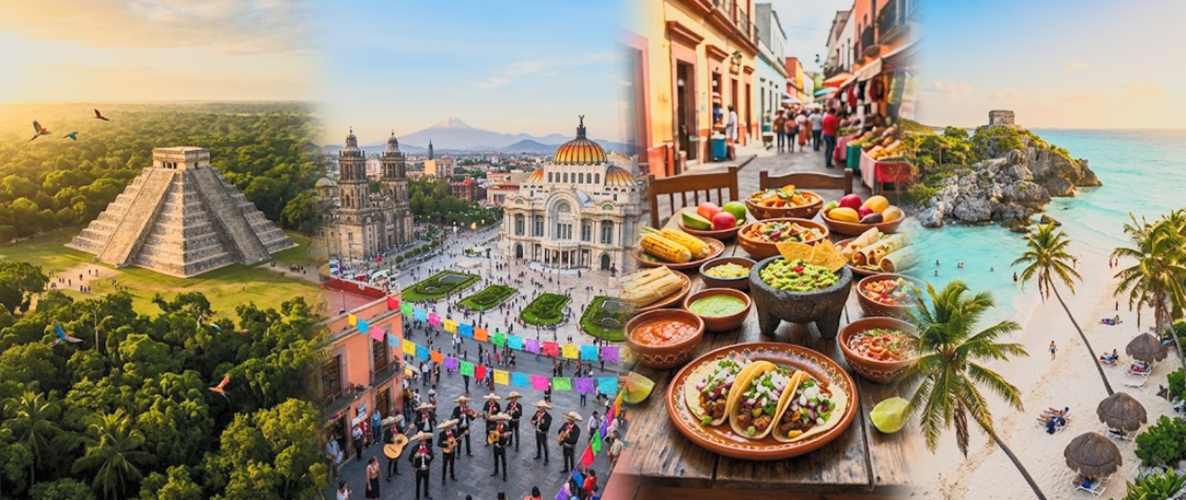
From the turquoise waters of the Caribbean Sea to the volcanic peaks of the Sierra Madre, passing through ancient pre-Columbian cities and vibrant colonial towns, Mexico unfolds an endless variety of landscapes and traditions. Traveling to Mexico means immersing yourself in a captivating nation where the Mesoamerican past engages in daily dialogue with contemporary art and modern life. Whether you are a history enthusiast, an avid hiker, a foodie seeking bold flavors, or a traveler looking to unwind on white sand beaches, Mexican soil holds unforgettable experiences for everyone.
Mexico’s Major Cities: Between Bustling Metropolises and Colonial Gems
Exploring the country begins with its major urban centers—vibrant hubs where local identity, art, and hospitality come alive.
Mexico City (CDMX): The Pulsing Heart of the Nation
A sprawling metropolis perched over 7,200 feet (2,200 meters) above sea level, the Mexican capital is an essential stop to grasp the country’s full cultural richness. Built on the ruins of the ancient Aztec capital of Tenochtitlan, Mexico City fascinates visitors with its striking contrasts.
Its historic center revolves around the Zócalo, one of the largest public squares in the world, anchored by the majestic Metropolitan Cathedral and the National Palace. Just a short walk away, the Palacio de Bellas Artes showcases masterwork murals by Diego Rivera and David Alfaro Siqueiros. For a more relaxed atmosphere, the neighborhoods of Condesa, Roma, and Coyoacán offer tree-lined avenues, bohemian cafés, and the legendary Frida Kahlo Museum (the « Casa Azul »).
Guadalajara: The Cradle of Folklore
As the country’s second-largest city and the capital of Jalisco state, Guadalajara embodies traditional Mexican heritage par excellence. This is the birthplace of mariachi music and the world-famous agave spirit, tequila. The historic downtown area showcases architectural masterpieces like the Hospicio Cabañas, a UNESCO World Heritage Site renowned for the powerful murals of José Clemente Orozco. Nearby, the artisan town of Tlaquepaque charms travelers with ceramic studios, pottery workshops, and lively outdoor dining.
Oaxaca de Juárez: The Artistic and Indigenous Soul
Regarded as the cultural capital of the south, Oaxaca enchants visitors with its green stone colonial architecture, vibrant markets, and centuries-old craft traditions. The city serves as a gateway to the heritage of the Zapotec and Mixtec civilizations. Strolling through its historic center reveals the stunning Church of Santo Domingo de Guzmán, contemporary art galleries, and artisanal mezcal distilleries nestled in the surrounding valleys.
Monterrey and the Central Colonial Towns
To the north, Monterrey stands out as Mexico’s economic powerhouse, set against the dramatic mountain backdrop of the Cerro de la Silla. In the central highlands, UNESCO-listed colonial cities such as San Miguel de Allende, Guanajuato, Querétaro, and Puebla captivate travelers with paved alleyways, ornate Baroque architecture, and internationally acclaimed arts festivals.
Must-Visit Attractions Across Mexico
From north to south, Mexico’s diverse geography and deep history offer rich itineraries tailored to every travel style.
Iconic Pre-Columbian Ruins
- Chichén Itzá (Yucatán): One of the New Seven Wonders of the World. The Temple of Kukulcán demonstrates the incredible mathematical, astronomical, and architectural precision achieved by Maya civilization.
- Teotihuacán (State of Mexico): Located just an hour from the capital, this ancient archaeological complex impresses with the Pyramids of the Sun and Moon, linked by the Avenue of the Dead.
- Tulum and Palenque: Tulum stands out for its Maya ruins positioned right on the cliff edge overlooking turquoise Caribbean waters. Further south, deep within the Chiapas rainforest, the site of Palenque features majestic temples shrouded in lush foliage.
Natural Wonders and Aquatic Paradise
Mexico boasts extraordinary natural biodiversity. Across the Yucatán Peninsula, cenotes—sacred natural sinkholes filled with crystal-clear freshwater—offer serene swimming in surreal rock settings. Further east, the Riviera Maya coastline and islands like Cozumel, Holbox, and Isla Mujeres are world-renowned for scuba diving, snorkeling, and marine life encounters.
For outdoor adventurers, the Copper Canyon (Barrancas del Cobre) in Chihuahua features a canyon network wider and deeper than the Grand Canyon in the United States, best explored aboard the iconic « El Chepe » train. In Chiapas, the Sumidero Canyon and Agua Azul waterfalls provide breathtaking boat tours through pristine wilderness. Meanwhile, Baja California serves as a world-class sanctuary for watching migrating gray whales in the Pacific Ocean.
Mexican Culture: Traditions, Festivals, and Craftsmanship
Mexican identity thrives on a unique fusion of pre-Columbian roots (Aztec, Maya, Zapotec) and Spanish colonial influences.
Day of the Dead (Día de Muertos)
Inscribed on UNESCO’s Intangible Cultural Heritage list, Día de Muertos (celebrated November 1st and 2nd) perfectly illustrates the Mexican vision of life, death, and remembrance. Far from being a somber occasion, it is a vibrant, joyful celebration where families build colorful altars adorned with marigold flowers (cempasúchil), culinary offerings, candles, and portraits to welcome back the spirits of loved ones. The festivities in Mixquic, Oaxaca, and the island of Janitzio are among the most authentic in the country.
Music and Dance
Music accompanies every aspect of daily life in Mexico. Mariachi ensembles, dressed in traditional charro attire, bring family celebrations and public plazas to life with trumpets, guitars, and violins. Beyond mariachi, regional styles such as son jarocho from Veracruz, norteño folk music, and infectious cumbia rhythms resound in squares and dance halls nationwide.
World-Renowned Regional Handcrafts
Each region of Mexico preserves distinct artisanal traditions:
- Alebrijes: Intricately carved wooden or papier-mâché sculptures representing fantastical creatures painted with vibrant, detailed patterns, originating in Oaxaca.
- Talavera Pottery: Glazed ceramic tilework and earthenware refined in Puebla, famous for cobalt blue and white geometric patterns.
- Handwoven Textiles: Huipiles, rebozos, and shawls handwoven by Indigenous communities using ancient backstrap loom techniques.
Mexican Cuisine: A Sensorial Journey
Designated a UNESCO Intangible Cultural Heritage of Humanity in 2010, Mexican food relies on an ancient agricultural tradition where heirloom corn, chili peppers (chiles), beans (frijoles), and tomatoes form the core of every dish.
Essential Dishes to Taste
- Mole Poblano: A complex, velvety sauce from Puebla crafted from over twenty ingredients, including various chili peppers, warm spices, seeds, and dark chocolate, traditionally served over chicken.
- Tacos: Available in endless regional variations across the country. Tacos al pastor—slow-roasted marinated pork shaved from a vertical spit with pineapple—reign supreme in Mexico City’s street food scene.
- Cochinita Pibil: The signature dish of the Yucatán Peninsula, featuring pork marinated in achiote paste and bitter orange juice, slow-cooked in banana leaves.
- Pozole: A hearty, traditional hominy soup prepared with pork or chicken, served alongside sliced radishes, shredded cabbage, oregano, and lime.
- Ceviches and Aguachiles: Along the Pacific and Caribbean coasts, fresh seafood and shrimp are cured in citrus lime juice with fresh chilies, cucumber, and red onion.
Traditional Beverages
To quench your thirst, Mexico offers refreshing aguas frescas (fruit- and botanical-infused drinks made from hibiscus flower/jamaica, tamarind, or sweet rice-cinnamon horchata). For spirits enthusiasts, fine Tequila and Mezcal are meant to be sipped slowly, paired with a pinch of agave worm salt (sal de gusano) and fresh orange slices.
Essential Practical Tips for Your Mexico Itinerary
Planning your trip effectively ensures a smooth and memorable journey through the country:
When to Visit Mexico
The ideal time to travel across most of Mexico is during the dry season, which runs from November to April. Temperatures are warm and comfortable, and rainfall is minimal. The rainy season, from May to October, brings brief tropical afternoon showers but rewards travelers with lush landscapes and fewer crowds.
Getting Around
Domestic flights efficiently cover long distances between major cities. For regional travel, Mexico’s long-distance bus network (first-class and luxury coaches) is modern, comfortable, and reliable. In the Yucatán Peninsula, renting a car provides the ultimate freedom to explore ancient ruins, cenotes, and coastal towns at your own pace.
Combining rich pre-Columbian history, colonial architecture, world-class gastronomy, and legendary hospitality, Mexico stands out as one of the most complete and captivating travel destinations in the world.


 Acheter sur Amazon FR


 EXPLORE

 EXPLORE
 FOOD