
 FOOD
Every morning, millions of people perform the same universal ritual: preparing a cup of coffee. But behind this daily, often mechanical gesture lies a fascinating odyssey that crosses continents, cultures, and centuries. Coffee is not just an energizing beverage; it is liquid terroir, a work of agricultural craftsmanship, and a permanent invitation to sensory exploration. From the mists of the high Ethiopian altitudes to the volcanic soils of Central America, all the way to the captivating aromas of your neighborhood roaster, the world of coffee is inexhaustibly rich. If you merely consume coffee out of habit, it is time to awaken your palate. Let yourself be guided through the plantations, the manufacturing secrets, and the dynamics of this global market to finally savor the true essence of these legendary beans.
The Coffee Bean Belt and the Magic of the Plantations
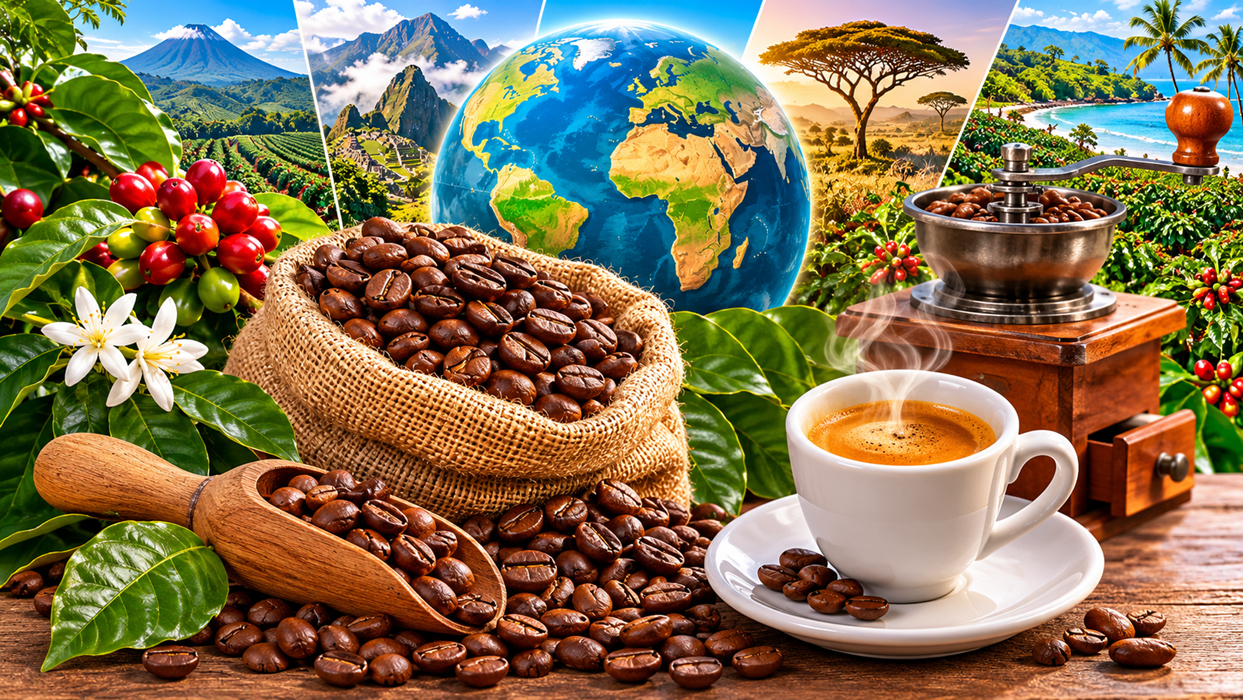
The journey inevitably begins at the source, between the Tropic of Cancer and the Tropic of Capricorn, in this sacred geographical zone known as the « Coffee Belt. » It is here, under specific latitudes, that the coffee tree finds the complex meteorological conditions necessary to flourish. Coffee cultivation is an exercise in patience and precision, intimately linked to the whims of nature and soil typology.
High-altitude terroirs, often located between 1,200 and 2,000 meters, are the most highly prized. At high altitudes, warm days and cool nights slow down the maturation of the coffee cherry. This peaceful growth rhythm allows the bean to develop superior molecular density and load up on complex sugars, thereby offering highly refined aromatic profiles, often marked by a crisp acidity and floral notes. The mineral-rich volcanic soils of Guatemala or Costa Rica confer unparalleled structure and clarity to the cup. Conversely, plantations located at lower altitudes, bathed in constant humid heat, such as in certain regions of Indonesia, produce coffees with a heavier body, alongside earthy and spicy aromas.
The cultivation method also plays a fundamental role. So-called « shade-grown » plantations, where coffee trees grow sheltered by large forest trees, preserve local biodiversity, nourish the soils with organic matter, and protect the shrubs from direct sunlight. It is within this respect for living things, under the shade of a protective canopy, that the most delicate harvests are often born, hand-picked cherry by cherry by producers whose expertise is passed down from generation to generation.
The Botanical Essence: Types and Rare Varieties
Just as wine celebrates Pinot Noir or Chardonnay, coffee has its own botanical family tree. Two species dominate the global market, but they hide a multitude of sub-varieties with strong characters.
Arabica (Coffea arabica) represents the nobility of coffee. Originating from the highlands of Ethiopia, it accounts for roughly 60 to 70% of global production. Demanding, fragile, susceptible to diseases, and requiring high altitudes, Arabica rewards these efforts with exquisite sweetness, great aromatic complexity, and a moderate caffeine content. Within the Arabica family, tremendous mutations and selections have given birth to jewels like Bourbon, known for its sweetness; Typica, the elegant ancestor with refined acidity; and the exceptionally rare Geisha, whose explosive notes of jasmine, bergamot, and tropical fruits send global auctions into a frenzy.
Robusta (Coffea canephora), on the other hand, lives up to its name. Growing at lower altitudes and in harsher climates, it is robust, resistant to pests, and offers generous yields. Long unloved for its pronounced bitterness, woody profile, and brute strength (boasting twice the caffeine of Arabica), Robusta is experiencing a renaissance today. Passionate producers are now crafting « specialty Robustas, » revealing surprising notes of pure cocoa and spices, and providing the thick crema essential for the best Italian espresso blends.
We must not forget the more marginal yet intriguing species, such as Liberica or Excelsa, which offer asymmetrical, fruity, and sometimes smoky gustatory dimensions, reminding us that nature always has a few tricks up its sleeve.
The Art of Roasting: The Alchemy of Fire
The green coffee bean, although it contains all the potential of its terroir, originally smells only like a mix of peas and hay. It is the artisan roaster who plays the role of alchemist, transforming this raw material into an aromatic bean through the action of fire. Roasting is a delicate dance between time and temperature, a precise science where every second counts.
When the bean heats up, it undergoes the famous Maillard reaction. Moisture evaporates, the bean turns yellow, then brown, releasing aromas of toasted bread. Around 200°C (392°F), the internal pressure becomes so great that the bean fractures: this is the « first crack, » a sound similar to popping popcorn. At this stage, the roaster must make a crucial choice that will determine the identity of the final beverage.
A light or « blonde » roast is favored for specialty coffees, particularly those from East Africa. It highlights the brightness, natural acidity, and floral or fruity aromas inherent to the bean’s origin. You taste the terroir before you taste the roast. A medium roast, often called a « monk’s robe, » represents the sweet spot. It slightly mutes the acidity to develop richer notes of milk chocolate, hazelnut, and caramel, while still retaining the typicity of the vintage. Finally, dark, heavy, or « Italian » roasts take the bean past the second crack. The oils rise to the surface, and the bean becomes black and shiny. Here, the empyreumatic notes dominate: bitter cocoa, toasted, woody. The character of the origin fades in favor of the roasting imprint, offering a powerful and very full-bodied cup.
Labels and Traceability: Drinking with a Conscience
At a time when consumers demand transparency, the market has structured itself around labels and certifications guaranteeing social, environmental, and qualitative standards. Understanding these labels ensures that the pleasure of the cup does not come at the expense of those who grow the bean or the planet.
- Fair Trade (Fairtrade / Max Havelaar): This label guarantees small producer cooperatives a minimum purchase price, protecting them from the brutal fluctuations of the stock market. It also includes a development premium intended to finance community projects (schools, hospitals).
- Organic Certifications: These ensure that the coffee has been grown without synthetic chemical fertilizers or pesticides, favoring agricultural methods that respect ecosystems and the health of the farmers.
- Rainforest Alliance and Bird Friendly: These certifications focus on biodiversity protection. The « Bird Friendly » label, which is particularly demanding, guarantees cultivation under strictly regulated shade, thereby preserving the natural habitat of migratory birds.
- Specialty Coffee (SCA): More than a label, this is a classification by the Specialty Coffee Association. A specialty coffee must score above 80 out of 100 in a tasting assessment by certified « Q Graders. » This system values gustatory excellence, traceability down to the specific plot (the micro-lot), and a direct, fair, and transparent relationship with the producer.
The Mechanics of the Global Market and Exports
Coffee is one of the most traded commodities in the world, ranking just behind oil in terms of financial flows in certain historical statistics. It is a colossal market, driven by the stock exchanges in New York (for Arabica) and London (for Robusta), where prices fluctuate based on droughts, frosts, and geopolitical events.
Brazil reigns as the undisputed master of exports. Its immense, often mechanized plantations supply more than a third of the world’s coffee, primarily a sweet and chocolatey natural Arabica that forms the foundation of commercial blends. Vietnam disrupted the market at the end of the 20th century by becoming the leading producer of Robusta, flooding the soluble coffee industry and strong extraction markets. Colombia maintains its reputation for excellence with impressive volumes of washed Arabica, known for its balanced and silky profile.
However, the most sought-after treasures often come from countries exporting smaller volumes. Ethiopia, the historical birthplace, offers coffees of unparalleled complexity, cultivated in an almost wild manner. Kenya shines with coffees boasting a dazzling acidity reminiscent of blackcurrant and tomato. Panama, though microscopic on the global chessboard, breaks extravagant price records thanks to its unique volcanic terroirs and its exceptional mastery of the Geisha variety.
Intimate Pleasure: Rituals, Extraction, and Tasting
At the end of this complex journey, everything comes down to a moment of pure pleasure. Tasting a world coffee is treating yourself to a moment of mindfulness. The magic happens during extraction, where water, time, and grind size must align perfectly.
Each preparation method reveals a different facet of the bean. Espresso, under high pressure, concentrates the oils and flavors, offering a dense, powerful, and syrupy elixir. Slow coffee methods, such as the V60, Chemex, or AeroPress, use gravity or gentle pressure to slowly infuse the coffee. These methods elevate light roasts, filtering out thick oils to allow a light, tea-like body to express itself, revealing notes of jasmine, peach, blueberry, or bergamot with surgical clarity.
To truly taste it, close your eyes. Smell the dry aromas of the grounds, then the wet aromas once the water is poured. Take the liquid into your mouth by slurping loudly to spray the coffee across your entire palate. Analyze the acidity: is it biting like a lemon or sweet like an apple? Evaluate the body: is it watery, creamy, velvety? Let the finish settle in—that aromatic persistence that lingers in your mouth long after the final sip.
Coffee is no longer just your morning dose of caffeine. It is a fascinating product of the terroir, a link between the relentless hard work of farmers on the other side of the globe, the artistic talent of the roaster, and your own curiosity. Push open the door of an artisan roaster, ask them about their latest harvests, choose an unfamiliar origin, and let yourself be surprised. The world is vast, complex, and magnificent; it is time to taste it, one cup at a time.

 EXPLORE
 EXPLORE
 EXPLORE
 EXPLORE