
 FOOD
Intro
Are you landing in the Land of the Rising Sun with a rumbling stomach? Forget tourist traps: Japanese ramen is much more than a simple noodle soup—it is a true culinary religion. Between broths simmered for hours, firm noodles, and strict counter etiquette, this national dish follows very specific rules. Grab your chopsticks; we are taking you to the heart of Japanese culture to learn how to slurp like a pro without making any faux pas.
What Is It Exactly?
Ramen didn’t end up in Japan by chance: imported from China in the 19th century, it transformed into an absolute national obsession. Behind the name lies a bowl made up of four essential elements: wheat noodles, a rich broth, a concentrated seasoning sauce (tare), and carefully selected toppings.
Four major regional families make the archipelago’s mouth water:
- Shoyu Ramen (Tokyo): The classic soy sauce-based broth—light, clear, and fragrant.
- Tonkotsu Ramen (Kyushu): A pork bone broth boiled for hours; thick, creamy, and extremely rich.
- Miso Ramen (Hokkaido): A rustic, comforting style seasoned with fermented soybean paste—perfect for braving the cold.
- Shio Ramen: The most delicate style, seasoned mainly with salt, letting the purity of the broth shine.
Key Ingredients
A great bowl relies on precise culinary chemistry. Every ingredient plays a crucial role in balancing the flavors:
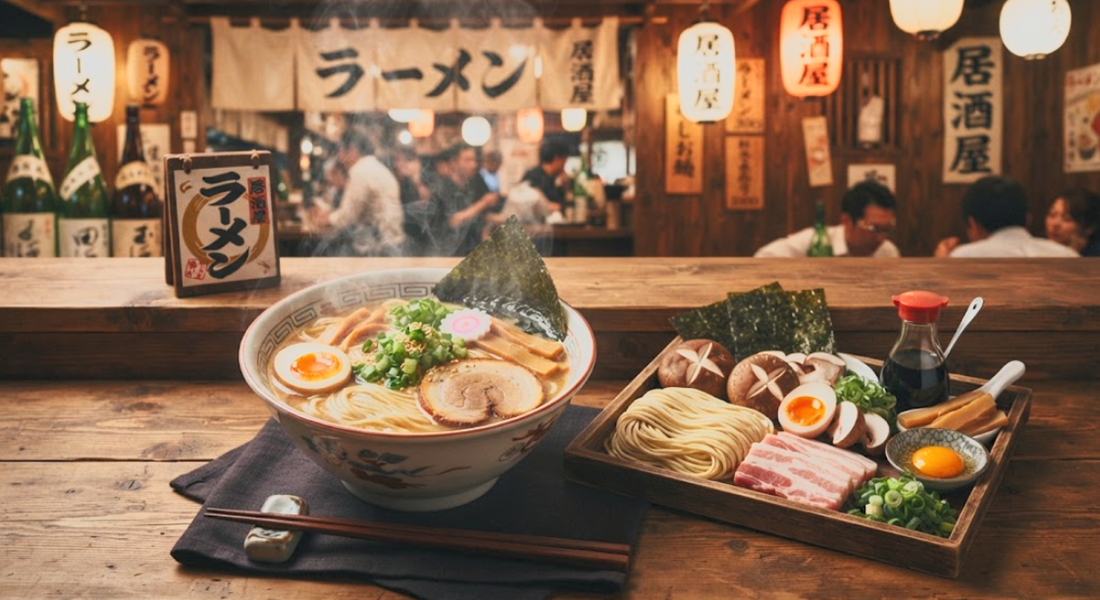
- Noodles (men): Made from wheat, water, salt, and kansui (alkaline water), they should be firm (kata) to hold the broth.
- Broth (dashi and soup): The heart and soul of the dish. It simmers for up to 12 hours or more, extracting rich flavors from pork bones, chicken, dried bonito flakes, or kombu kelp.
- Seasoning (tare): The concentrated base poured into the bowl before the broth (soy sauce, salt, or miso) that delivers an umami and salty kick.
- Chashu: Melt-in-your-mouth braised rolled pork belly.
- Marinated Soft-Boiled Egg (ajitsuke tamago): Cooked to perfection with a runny yolk infused with soy sauce and mirin.
- Bamboo Shoots (menma): Added for a crunchy texture and slightly fermented taste.
- Nori Seaweed & Green Onions (negi): For a fresh, oceanic final touch.
How Is It Prepared?
Preparing good ramen is an art form that requires days of work, even though the service itself is lightning-fast.
- Step 1: Simmering the Broth. Bones and aromatics (garlic, ginger, onions) cook over low heat or at a rolling boil depending on the desired style to release collagen.
- Step 2: Preparing the Toppings. The chashu pork is seared and then slowly braised in a simmering broth. The eggs marinate in the fridge for hours.
- Step 3: Quick Cooking. The noodles are plunged into boiling water for a record time (often just 1 to 2 minutes) to ensure an al dente texture.
- Step 4: Lightning Assembly. The chef pours the tare into the bottom of the bowl, adds the scalding broth, drops in the drained noodles with a flick of the wrist, and artistically arranges the toppings.
Why It Is a Pillar of Japanese Culture
In Japan, ramen goes far beyond simple fast food. It is a symbol of social comfort and artisanal craftsmanship (shokunin). Millions of Japanese people stop by street stalls (yatai) or neighborhood counter shops (ramen-ya) for a quick, solitary, yet cozy meal after a long workday.
It is also the product of a successful cultural fusion between China and Japan, illustrating the country’s ability to adopt a foreign cuisine and elevate it. Cult films like Tampopo have even elevated ramen to the level of cinematic and sociological art.
Where and How to Eat It There
To enjoy an authentic bowl, forget fine dining restaurants and head to neighborhood shops with wooden counters.
- Type of Establishment: Traditional ramen-ya. You often order using a ticket vending machine (shokkenki) located at the entrance.
- Average Price: Expect to pay between ¥800 and ¥1,200 (around €5 to €8 / $5 to $9 USD) for a generous standard bowl.
- How to Order: Insert your cash or card into the machine, choose your dish and extra toppings by pressing the illustrated buttons, and hand your ticket to the chef.
- Table Etiquette: Slurping loudly (suuru) isn’t rude—it’s encouraged! It cools down the hot noodles and enhances the flavors. Finish your broth if you can; it’s a sign of respect.
- Tourist Mistakes to Avoid: Never ask to take home leftovers (ramen is meant to be eaten immediately), don’t let your noodles sit too long in the broth or they will get soggy, and don’t linger at the counter once you’ve finished.
Want to unlock all the secrets behind the perfect broth? Book a [Guided Culinary Experience: Cooking Class & Ramen Food Tour in Tokyo] now to cook alongside a master craftsman!
Useful Phrases
To order like a regular and impress the locals:
- « O-susume wa nan desu ka? » (What is your specialty?) -> お勧めは何ですか?
- « Tonkotsu ramen o hitotsu onegai shimasu. » (One Tonkotsu ramen, please.) -> 豚骨ラーメン ひとつ お願いします。
- « Katame de. » (Firm noodles, please.) -> 固めで。
- « Gochisousama deshita! » (It was delicious, thank you for the meal!) -> ごちそうさまでした!
Frequently Asked Questions
Is it polite to slurp ramen noodles in Japan?
Yes, absolutely! Slurping your noodles loudly is not considered bad manners in Japan. It helps cool down the hot broth while aerating the food to better release its flavors. Chefs even take it as a compliment!
What is the average price of a bowl of ramen in Japan?
A good-quality traditional bowl of ramen usually costs between 800 and 1,200 yen (about 5 to 8 euros). Options with extra chashu pork or additional marinated eggs can bring the total to around 1,500 yen.
What are the main differences between ramen types?
Ramen types differ mainly by their broth and base seasoning (tare). Shoyu uses soy sauce, Shio is light and salted, Miso incorporates a rich fermented soybean paste, and Tonkotsu features a long-simmered, highly creamy pork bone broth.
How do you order ramen in a Japanese shop?
The vast majority of ramen shops use a ticket vending machine at the entrance. You insert your money, select your dish by pressing the illustrated buttons, retrieve your ticket, and give it to the chef as you sit at the counter.
Conclusion
You are now fully prepared to tackle Japanese counters and order your bowl without breaking a sweat. Japanese ramen holds no more secrets for you. To plan the rest of your trip and ensure you don’t miss any local highlights, check out our guide on JAPAN today!


 EXPLORE

 EXPLORE


 EXPLORE