
 EXPLORE
Travel in Tunisia: An Escape Between Ancient Cities, Sahara Oases, and Gourmet Heritage
Basked in miles of Mediterranean coastline and bordered by the golden expanses of the Sahara Desert, Tunisia is a land of striking contrasts. A millennial crossroads of Phoenician, Roman, Arab-Muslim, and Ottoman civilizations, this North African country offers a rare concentration of archaeological treasures, picturesque cities, and spectacular natural landscapes. Whether you are an ancient history enthusiast, a desert hiker, or a traveler seeking Mediterranean sweetness, Tunisia promises an unforgettable cultural and sensory immersion.
Must-Visit Cities and Historical Gems
Tunis and Its Mythic Medina
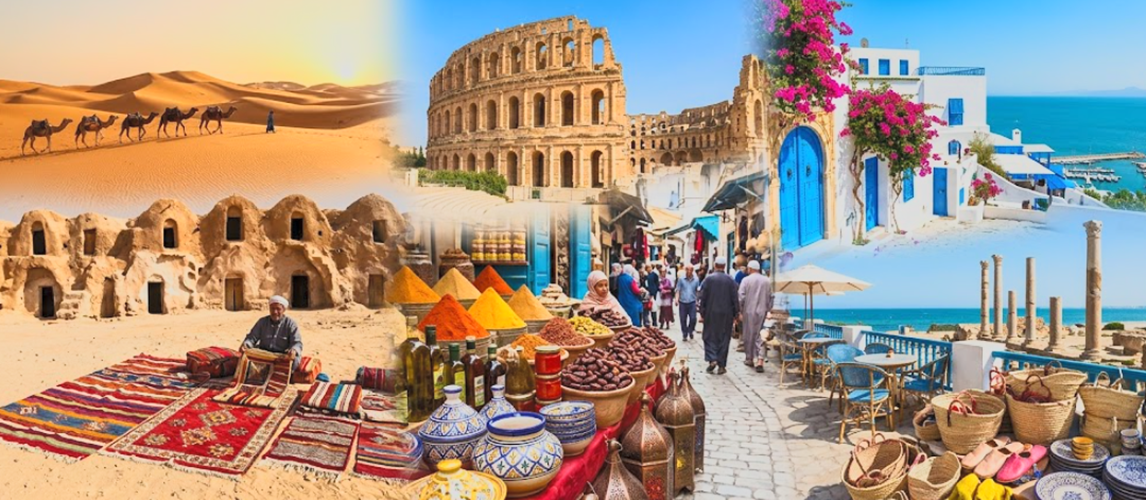
A vibrant capital, Tunis offers an ongoing dialogue between modernity and tradition. The beating heart of the city lies in its Medina, a UNESCO World Heritage site. Passing through the monumental gate of Bab El Bhar, visitors enter a poetic maze of cobbled alleyways, majestic mosques like Al-Zaytuna, and Ottoman palaces with carved patios. Colorful souks follow one another in a festival of aromas and colors: the perfumers’ souk (Souk El Attarine), the traditional chechia souk, or the leather babouche slippers souk.
Sidi Bou Said: The Blue and White Village
Perched on a cliff overlooking the Gulf of Tunis, Sidi Bou Said is one of the most picturesque villages in the Mediterranean. Its whitewashed houses, enhanced by indigo blue wrought-iron lattice windows (moucharabiehs) and studded doors, have charmed many artists such as Henri Matisse and Paul Klee. Strolling along its bougainvillea-lined alleys, making a gourmet stop at the legendary Café des Délices to savor pine nut tea facing the sea, is a must-do ritual for any trip to Tunisia.
Carthage: Echoes of Ancient Power
Just minutes from the capital stand the ruins of Carthage, the legendary rival city of Rome founded by Queen Dido (Elyssa). History buffs can explore Byrsa Hill, the imposing Baths of Antoninus along the shore, the Punic ports, and the Tophet sanctuary. The site’s historical energy, combined with the sea breeze, creates a uniquely solemn atmosphere.
Kairouan: The Spiritual City and Cradle of History
Founded in the 7th century, Kairouan is the first Islamic city in the Maghreb and the fourth holiest city in Islam. Its Great Mosque of Oqba ibn Nafi, with its immense courtyard and austere minaret reminiscent of a fortress, is an architectural masterpiece. Beyond its religious heritage, Kairouan charms visitors with its timeless medina where time seems to have stood still.
Sousse and Monastir: Guardians of the Sahel
Located along the eastern coast, Sousse and Monastir pleasantly combine medieval history with seaside pleasures. Sousse’s Medina surprises with its light-colored domes and fortified Ribat. In Monastir, the imposing Ribat standing directly across from the sea offers breathtaking panoramic views of the coastline and the Habib Bourguiba Mausoleum from the top of its tower.
Fascinating Landscapes: From Djerba to the Gates of the Sahara
Djerba: The Mythic Island of Timeless Charm
Nicknamed « Djerba the Sweet », the island celebrated by Homer in the Odyssey is an enchanting getaway. Renowned for its fine sandy beaches lined with palm trees, it also houses a uniquely rich cultural heritage. Visitors can explore Houmt Souk and its market alleys, the El Ghriba Synagogue—one of the oldest in the world—and the village of Erriadh, transformed into an open-air urban art museum through the Djerbahood project.
Tozeur and Nefta: The Enchantment of the Oases
West of Chott El Jerid, a vast salt lake with magical shimmers, lie the oasis towns of Tozeur and Nefta. Tozeur surprises visitors with its distinctive ochre brick architecture forming intricate geometric patterns. Its giant palm grove, fed by natural springs, is a haven of freshness amid arid land. Further along, the Tamerza gorges and the mountain oasis of Chebika offer spectacular scenery with waterfalls gushing amidst desert rocks.
Matmata and the Troglodyte South: A Lunar Setting
In the arid terrain of the South, the village of Matmata features an almost otherworldly landscape. Residents carved underground troglodyte dwellings around circular courtyards to protect themselves from the extreme summer heat. This timeless setting served as a filming location for the Star Wars saga, becoming an iconic stop for fans from around the world.
The Amphitheatre of El Jem: The Colosseum of Africa
Rising in the middle of the olive groves of central Tunisia, the Amphitheatre of El Jem is one of the best-preserved Roman monuments in the world. Capable of seating over 30,000 spectators in ancient times, this monumental arena rivals Rome’s Colosseum in grandeur and bears witness to the prosperity of the former Roman province of Africa.
Culinary Heritage and Traditional Crafts
A trip to Tunisia is also experienced through its authentic flavors and multi-millennial craft traditions.
Green Gold: Exceptional Olive Oil
Tunisia is among the world’s leading producers of olive oil. Millions of olive trees, some centuries old, shape the landscape from Sfax to the Sahel. Mild and fruity, Tunisian olive oil is the centerpiece of local cuisine. It generously drizzles lablabi (spiced chickpea soup), mechouia salad, and fresh seafood dishes.
Harissa: The Spicy Soul Listed by UNESCO
A true national symbol, Tunisian harissa is a paste made from sun-dried red chili peppers ground with garlic, caraway, coriander, and olive oil. Inscribed on UNESCO’s Intangible Cultural Heritage list, it accompanies almost every Tunisian meal, bringing a warm, aromatic spice.
The Deglet Nour Date: The Fruit of Light
Grown in the palm groves of Tozeur and Kebili, the Deglet Nour date (literally « finger of light ») is considered the queen of dates. Translucent, soft, and naturally sweet, it makes a delicious energy snack and an ideal edible souvenir to bring home.
Artisan Crafts and Ancestral Know-How
Tunisian craftsmanship showcases rich diversity across regions:
- Nabeul Pottery and Ceramics: Brightly colored tableware and glazed earthenware tiles with traditional patterns.
- Kairouan Carpets: Hand-knotted wool rugs featuring high density and ancestral geometric motifs.
- Sidi Bou Said Wrought Iron: Finely crafted moucharabiehs and lanterns.
- Copper Engraving and Leatherwork: Engraved trays, handcrafted babouche slippers, and leather bags from the medina.
Traditional Pastries: Oriental Delights
Sweets lovers should not miss Kairouan’s Makroudh, a semolina pastry filled with dates, drizzled with honey syrup and orange blossom water. Fine pastries made with almonds, pistachios, pine nuts, and hazelnuts perfectly complement the ritual of mint tea.
Practical Tips for a Successful Trip
When to Go?
Spring (March to May) and autumn (September to November) are the ideal seasons to explore the entire country. Temperatures are pleasant along the coasts and for venturing into the southern Sahara. Summer is ideal for beach stays in Djerba, Hammamet, or Tabarka.
Getting Around
To travel between cities, the network of louages (shared intercity taxis—fast and economical) offers an authentic local experience. To explore the desert, mountain oases, and Saharan tracks, renting a 4×4 vehicle with a local guide is highly recommended.
Lifestyle and Hospitality
Legendary Tunisian hospitality (Aslema) is felt every day. Taking time to chat with an artisan in the souks, sharing a mint tea, or exchanging a few words of Tunisian Arabic will greatly enrich your travel experience.

 Buy on Amazon Fr

 EXPLORE

 EXPLORE
 EXPLORE