
 EXPLORE
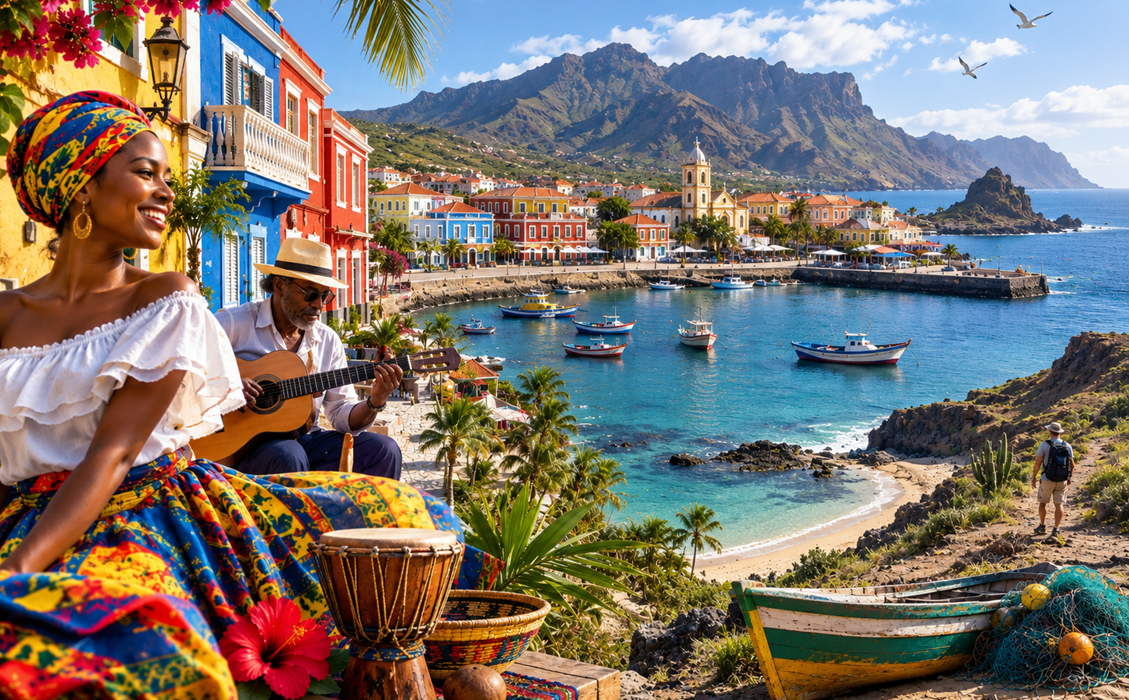
Are you dreaming of an exotic destination untouched by mass tourism, where the sun shines year-round and the locals’ hospitality warms your heart? Look no further; a trip to Cape Verde is exactly what you need. Lost in the middle of the Atlantic Ocean, off the coast of Senegal, this small archipelago of ten volcanic islands is a true rough diamond.
Whether you are a fan of lounging on white sandy beaches, an enthusiast of breathtaking hikes in the heart of lush mountains, or an explorer seeking a vibrant, diverse culture, tourism in Cape Verde offers an absolutely fascinating variety of experiences. In this comprehensive SEO guide, we take you to discover the « Little Country » sung about by the legendary Cesária Évora. Get ready to explore its poignant history, flavorful gastronomy, warm culture, and the best places to visit in Cape Verde to make your next vacation a lasting memory.
Why Choose Cape Verde as Your Next Travel Destination?
Cape Verde stands out with its unique atmosphere, a perfect blend of Africa, Europe, and South America. But why should you choose this destination over another?
First, for its exceptional climate. Nicknamed the archipelago of the endless summer, the country enjoys mild temperatures ranging between 24°C and 30°C (75°F to 86°F) year-round, with almost constant sunshine. It is the ideal place to escape the gloomy European or North American winter.
Secondly, Cape Verde is an extremely safe destination for travelers. Political instability is non-existent, and the crime rate is very low compared to other long-haul destinations. It is a peaceful, democratic country where families, honeymooners, and even solo travelers can wander safely, day or night.
Finally, it is the stunning diversity of landscapes that attracts visitors. You can go from desert dunes and endless beaches to lush, steep valleys in a single inter-island flight. Each island has its own identity, microclimate, and atmosphere, making a single trip to Cape Verde feel like visiting several different countries.
The Fascinating History of Cape Verde: A Crossroads of Continents
To truly understand the richness of Cape Verdean culture, diving into its history—both tragic and foundational—is essential. Unlike many other islands in the region, the Cape Verde archipelago was completely uninhabited before its discovery by Portuguese navigators, notably Diogo Gomes and António de Noli, around 1456. Very quickly, due to its strategic geographical position in the middle of the Atlantic Ocean, the archipelago became a major hub and a grim transit point for the triangular trade and the transatlantic slave trade between Africa, Europe, and the Americas.
The town of Ribeira Grande, known today as Cidade Velha on Santiago Island, was the very first European settlement built in the tropics. Enslaved Africans, torn from their homeland, crossed paths with Portuguese colonists here. From this dark era emerged a profound and globally unique mixing of cultures—the « Creole » people—who forged a resilient identity and their own vibrant, poetic language: Cape Verdean Creole.
Over the centuries, the archipelago suffered terrible famines caused by chronic droughts, forcing a large part of the population into exile. Today, the Cape Verdean diaspora around the world (massively present in the United States, Europe, and Brazil) outnumbers the population residing on the islands. After a long, peaceful, but determined struggle led by major intellectual and political figures like Amílcar Cabral, Cape Verde finally gained its independence on July 5, 1975. Since then, the country has established itself as a model of stability and growth on the African continent, transforming its painful heritage into an impressive cultural strength.
Cape Verdean Culture: « Morabeza » and Music in the Blood
If there is one word you will remember from your exploration of Cape Verde, it is undoubtedly « Morabeza ». More than just a concept, it is a true art of living. Literally untranslatable, Morabeza refers to the legendary hospitality, kindness, gentleness, and warm welcome of the Cape Verdean people. It is that sincere smile a fisherman gives you at the port, that spontaneous invitation to share a meal, or that feeling of instantly being treated as a friend rather than a passing tourist.
This human warmth finds its most vibrant expression in music, which is the true soul of the country. Music echoes absolutely everywhere: in the cobbled streets, on the sandy beaches, in local buses (the famous « aluguers »), and in small neighborhood bars. The most famous genre is undoubtedly the Morna. Made globally famous by the barefoot diva, Cesária Évora, the Morna is a sweet and melancholic melody, often accompanied by a guitar and a cavaquinho, expressing « sodade » (nostalgia, longing for the homeland, and missing loved ones far away).
But Cape Verdean music doesn’t stop at melancholy, far from it. To party and dance the night away, locals turn to the Funaná, a fast, joyful, and rhythmic beat originating from Santiago Island, traditionally played on a diatonic accordion and a ferrinho (a scraped iron bar). You will also discover the Coladeira, a catchy and satirical music, as well as the Batuque, a powerful rhythmic expression once forbidden, driven by women. Attending a live music concert in a small Cape Verdean restaurant is an absolute must-add to your list of things to do in Cape Verde.
The Must-See Islands: What to See and Do in Cape Verde?
The archipelago is divided into two distinct groups: the Barlavento (windward, northern) islands and the Sotavento (leeward, southern) islands. Here is an overview of the gems you shouldn’t miss during your vacation.
Sal and Boa Vista: The Paradise of Beaches and Water Sports
If your vision of perfect holidays involves endless white sand and crystal-clear turquoise waters, Sal and Boa Vista are the destinations for you. Sal Island, with its famous Santa Maria beach, is the epicenter of beach tourism.
It is also one of the world’s best spots for kitesurfing and windsurfing, thanks to the regular trade winds that sweep its coasts in winter. Don’t forget to visit the Pedra de Lume salt flats, located at the bottom of an extinct volcano crater, where you can float in extremely salty water, providing the same sensation as the Dead Sea.
Boa Vista, on the other hand, offers a wilder and more pristine atmosphere. With its vast sand dunes reminiscent of the Sahara, like the Viana Desert, and its immense, deserted beaches such as Santa Monica, it invites long romantic walks and privileged turtle watching (the Caretta caretta) as they come to lay their eggs on its shores between July and October.
Santo Antão: The Hiking Jewel
For lovers of wild nature, wide-open spaces, and trekking, the island of Santo Antão is the absolute Holy Grail. Accessible only by ferry from São Vicente, this island offers landscapes of breathtaking, dramatic beauty.
Its steep mountains, plunging straight into the turbulent ocean, hide lush valleys like the famous Paul Valley, where sugarcane, banana trees, mango trees, and high-altitude coffee plantations flourish. Meticulously paved mule tracks traverse dizzying ridges and connect small villages literally suspended in the clouds. Santo Antão’s landscapes are often compared to those of Hawaii or Madeira, offering a dizzying contrast to the arid dryness of the eastern islands.
São Vicente and Mindelo: The Cultural Capital
The island of São Vicente, and specifically its vibrant capital Mindelo, is the beating heart of Cape Verdean culture. Mindelo is renowned for its elegant pastel-colored colonial architecture, its constant artistic buzz, and its lively nightlife around the port. It is the hometown of the great Cesária Évora, and you can breathe poetry and music on every street corner. If you are lucky enough to plan your trip to Cape Verde in February or March, you can attend the famous Mindelo Carnival, the most spectacular in Africa. Heavily inspired by the Rio de Janeiro carnival in Brazil, it transforms the city with its sumptuous floats, feathered costumes, and frenzied percussion echoing until dawn.
Fogo: Climbing the Mythical Volcano
The island of Fogo perfectly lives up to its name (« Fire » in Portuguese). It majestically hosts Pico do Fogo, a still-active stratovolcano peaking at 2,829 meters, marking the highest point in the country.
Climbing the volcano, which requires an early morning start with an experienced local guide, is a physically demanding but unforgettable experience, rewarded with stunning ocean views and a particularly fun descent running down through the thick black volcanic ash. Right inside the immense caldera lives a small, resilient community, Chã das Caldeiras. Braving the danger of eruptions (the last one was in 2014), these locals cultivate vines on this highly fertile volcanic soil, producing the famous and potent Fogo red wine.
Santiago: The Cradle of History and African Roots
Santiago is the largest, most agricultural, and most populated of the Cape Verdean islands. This is where you’ll find the country’s bustling political and economic capital, Praia. Santiago is considered the most African island in the archipelago, both for its rugged mountain landscapes and its deeply rooted traditions.
A visit to Cidade Velha, a UNESCO World Heritage site, is a must. Here, you will discover with emotion the ruins of Africa’s first cathedral, the imposing São Filipe fortress overlooking the bay, and the pillory in the main square—poignant historical testaments to the island’s colonial and slave-trading past. In the center of Santiago, the colorful and chaotic market of Assomada and the Serra Malagueta natural forest park offer excursions rich in local encounters and natural discoveries.
Gastronomy: What Are the Must-Try Traditional Dishes?
Cape Verdean cuisine is an intimate reflection of its culture: diverse, generous, comforting, and full of flavor. Eating local is an integral part of your travel experience.
The ultimate national dish, which you absolutely must taste during your stay, is Cachupa. A very hearty stew that simmers patiently for long hours over low heat, Cachupa is made of hominy (crushed corn), dried beans, root vegetables (cassava, sweet potatoes), and cabbage. Depending on the family’s means or the restaurant’s menu, meat (pork, chicken, spicy chorizo) or fish is added. The premium version, served with various meats, is proudly called « Cachupa Rica. » The next morning, the savory leftovers are often pan-fried with onions and served with a fried egg and local sausage for an incredibly filling breakfast called « Cachupa Refogada » (or Cachupa frita).
Seafood lovers will be in paradise in Cape Verde. Fresh fish, line-caught that very day, is ubiquitous on restaurant menus. Tuna (atum), swordfish, grouper, octopus, and fried moray eel are common, delicious, and highly affordable delicacies. Be sure to try Búzio (a traditional stew of large sea snails) or Caldo de Peixe, a flavorful fish broth spiced with coriander and mild chili.
For daytime snacks, Pastéis (crispy fried pastries stuffed with spicy tuna or meat) sold by street vendors are an absolute delight to nibble on the go. Finally, to accompany these generous meals or seal a new friendship late at night, locals always share Grogue, the traditional Cape Verdean rum artisanally distilled from local sugarcane, particularly in the valleys of Santo Antão and Santiago. Purists can enjoy it straight, or it can be consumed as a « Ponche » (a sweeter liqueur mixed with molasses, lemon, or local fruits like passion fruit).
Practical Information for Organizing Your Trip to Cape Verde
Planning your Cape Verdean adventure requires a little forethought, particularly regarding travel logistics. Here is the essential information you need to know.
When to go to Cape Verde? The dry tropical climate allows for comfortable travel to Cape Verde all year round. However, there are two main seasons: the dry season, running from November to June, and the rainy season (or wet season), from July to October. Rest assured, rainfall is rare, localized, and usually manifests as brief, intense tropical downpours. The period from December to April is the most popular among tourists seeking winter sun, as well as kitesurfers drawn by strong winds. For hiking, the months immediately following the rainy season (October, November, and December) are absolutely ideal because the mountains are blanketed in spectacular emerald green.
Visa and Customs Formalities For citizens of the European Union, Switzerland, the UK, the US, Canada, and other Western countries, the traditional passport visa has been abolished for tourist stays under 30 days. However, it is strictly mandatory to register online on the official EASE portal of the Cape Verdean government a few days before departure and pay the TSA (Airport Security Tax). Ensure your passport is valid for at least 6 months beyond your scheduled return date.
Getting Around Between Islands (Flights and Ferries) Inter-island logistics are often the most complex aspect of organizing a stay in Cape Verde. To get from one island to another, you have two options: by plane or by boat. The national airline operates inter-island flights in ATR aircraft, which are practical and essential for connecting distant islands (like Sal to São Vicente). However, delays or last-minute schedule changes are common; it is therefore highly advisable to build a good margin of flexibility into your itinerary and avoid scheduling a domestic flight on the exact same day as your international return flight.
Modern ferries offer a more economical maritime alternative, but the network depends on ocean conditions. The sea route between São Vicente (Mindelo) and Santo Antão (Porto Novo), however, is the only way to reach the latter, with regular daily crossings taking about an hour.
On each island, the most authentic, picturesque, and cheapest mode of ground transport is the « aluguer » (a collective minibus, often a Toyota). It has no fixed departure schedule and only leaves when full of passengers. For more freedom and autonomy to explore remote areas, private taxis and rental vehicles (4x4s are mandatory for dirt tracks) are readily available in tourist agencies.
Finally, the local currency is the Cape Verdean Escudo (CVE), which enjoys a fixed and guaranteed exchange rate with the Euro (1 Euro exactly equals 110.265 Escudos). In practice, cash Euros are accepted almost everywhere by merchants, hotels, and drivers, making transactions particularly easy for European travelers.
Conclusion: Let Yourself Be Captivated by the Archipelago’s Magic
Choosing to travel to Cape Verde means agreeing to slow down your frantic pace of life and peacefully surrender to the omnipresent national motto: « No stress. » This magnificent archipelago in the middle of the Atlantic doesn’t just offer postcard-perfect beaches or spectacular mountains meant for trekking; above all, it offers a genuine, profound, and sincere human connection.
From the poignant melancholy of a Morna sung acoustically in a small Mindelo bar to the vast, silent majesty of the Fogo crater, and the radiant, infectious smiles of locals passed on the cobbled paths of Santo Antão, Cape Verde touches its visitors right in the heart. Pack your hiking gear and your swimsuits, learn a few greetings in Creole, and fly off for a memorable adventure off the beaten path. You will inevitably return rejuvenated, inspired, and transformed by the unmatched relaxed lifestyle of this preserved little paradise.


 EXPLORE
 EXPLORE
 EXPLORE

 EXPLORE