
 EXPLORE
Traveling to Sweden: The Guide Between Untamed Nature, History, and Nordic Lifestyle
Bordered by the Baltic Sea and extending beyond the Arctic Circle, Sweden embodies the perfect balance between urban modernity and preserved wild spaces. Whether you dream of exploring archipelagos with thousands of islands, admiring the northern lights in the Far North, or immersing yourself in an urban culture focused on design and well-being, this Scandinavian kingdom offers a truly unique travel experience.
Here is a complete dive into the heart of Sweden: its eventful history, legendary way of life, iconic cities, culinary specialties, and all the reasons why this destination should be at the top of your travel list.
1. A Captivating History: From Vikings to Builders of Peace
Swedish history has shaped the identity of a people closely tied to the land and the sea. It breaks down into several major, defining eras:
- The Viking Age (8th – 11th century): Formidable explorers and traders, Swedish Vikings (the Varangians) sailed east, traveling along the rivers of Eastern Europe as far as Constantinople and Baghdad. The trading post of Birka, located on Lake Mälaren near Stockholm, still bears witness to this merchant power today.
- The Hanseatic League and the Middle Ages: Starting in the 12th century, Baltic trade became structured. The island of Gotland and its fortified town of Visby became major hubs of the Hanseatic League, leaving behind a remarkable architectural heritage.
- The Swedish Empire (17th century): Under the reign of ambitious kings such as Gustavus Adolphus (Gustav II Adolf), Sweden established itself as a major European military power. It controlled much of the Baltic basin before the Great Northern War slowed its territorial ambitions in the early 18th century.
- The Bernadotte Dynasty and Neutrality: In 1810, against all odds, French Marshal Jean-Baptiste Bernadotte was chosen as heir to the throne. Under the crown of Charles XIV John, he laid the foundation for a policy of prudent alliance. Sweden traversed the 20th century in armed neutrality, building an envied social model (the Folkhemmet or « People’s Home »).
2. Culture and Lifestyle: The Incomparable Nordic Spirit
Understanding Sweden means adopting a rhythm where respect for others and reconnecting with the elements reign supreme.
Lagom: The Art of « Not Too Little, Not Too Much »
The concept of lagom summarizes the Swedish philosophy of life. Neither excessively austere nor ostentatiously boastful, lagom seeks the right balance in everything: work, consumption, interior decor, and relationships. It is the quest for perfect balance.
Fika: More Than a Coffee Break, a Social Ritual
If there is a sacred tradition in Sweden, it is fika. Practiced daily, this break consists of gathering over filtered coffee accompanied by an artisanal pastry, most often a kanelbulle (cinnamon bun). Fika is a warm moment of exchange where time stands still.
Allemansrätten: The Right of Public Access to Nature
Enshrined in the Swedish constitution, the right of public access to nature (Allemansrätten) allows anyone to roam freely, camp for a night, pick wild berries or mushrooms, and swim in lakes, provided they respect wildlife, flora, and private property.
3. Major Swedish Cities: Where Design Meets History
Each Swedish metropolis possesses a distinct personality, bordered by water and integrated into an exceptional natural setting.
Swedish Metropolises
- Stockholm:
- 14 islands on the water
- Vasa, Gamla Stan
- Göteborg:
- Gastronomy & canals
- Western Archipelago
- Malmö:
- Öresund Bridge
- Avant-garde design
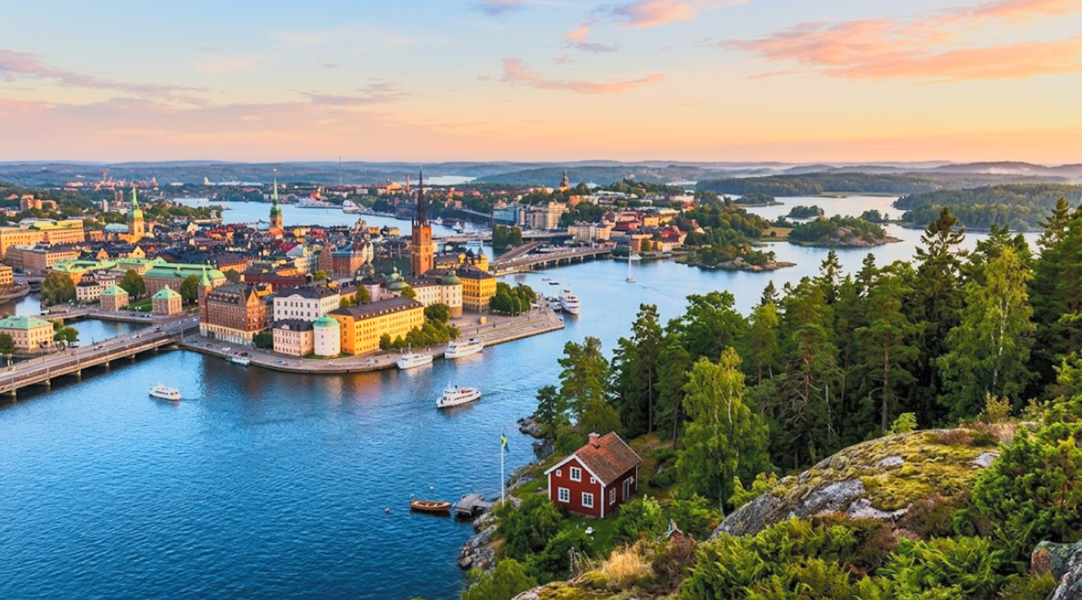
Stockholm: The Venice of the North
Built on 14 islands connected by 57 bridges, the Swedish capital charms visitors with its luminous light and beautiful architecture.
- Gamla Stan: The historic heart of the city, featuring narrow cobbled alleys, 17th-century ochre facades, and the Royal Palace.
- The Vasa Museum: Houses the world’s only preserved 17th-century ship, over 95% original, salvaged after 333 years underwater.
- Södermalm: The creative and trendy neighborhood, popular for its vintage design shops, galleries, and panoramic viewpoints.
Gothenburg: Gastronomic and Maritime Capital
Located on the west coast, Gothenburg is famous for its relaxed atmosphere, blue trams, historic canals, and direct access to a poetic, car-free archipelago. The city also hosts a world-class culinary scene dedicated to seafood.
Malmö: Gateway to the South
Connected to Copenhagen by the impressive Öresund Bridge, Malmö is a multicultural, young, and eco-friendly city. The sustainable district of Västra Hamnen, dominated by the twisting Turning Torso skyscraper designed by Santiago Calatrava, illustrates the Scandinavian architecture of tomorrow.
4. Must-Visit Attractions and Incredible Natural Wonders
Sweden boasts contrasting landscapes, from agricultural lands in the south to the wild arctic wilderness of the north.
Swedish Lapland and Abisko
North of the Arctic Circle, Lapland is the home of the indigenous Sámi people. In winter, Abisko National Park offers one of the best microclimats in the world for viewing the northern lights. In summer, the region moves to the rhythm of the midnight sun, allowing for endless hikes along the iconic Kungsleden (King’s Trail).
The Island of Gotland and Visby
Located in the middle of the Baltic Sea, Gotland offers a mild climate, fine sand beaches, and impressive limestone sea stacks (rauks). Its capital, Visby, a UNESCO World Heritage site, has kept its 3.4 km medieval town wall intact.
Dalarna (Dalecarlia)
Considered the romantic heart of Swedish folklore, Dalarna surrounds the magnificent Lake Siljan. This is where the famous Dala horses—carved from wood and painted red—are made by hand, and it is the ideal place to celebrate Midsommar (Midsummer) around flower-decorated maypoles.
5. Swedish Gastronomy: Between Tradition and Haute Cuisine
Long summarized as humble traditional food (Husmanskost), Swedish gastronomy has undergone a true revolution. It highlights the freshness of local produce, fermentation, and curing.
Specialties You Must Try
- Köttbullar: The famous pan-fried meatballs, traditionally served with creamy mashed potatoes, rich meat gravy, pickled cucumbers, and lingonberry jam (lingon).
- Gravad Lax: Raw salmon cured with salt, sugar, pepper, and fresh dill, sliced thin and served with a dill-mustard sauce (hovmästarsås).
- Smörgåstårta: A spectacular savory sandwich cake made of layers of bread filled with shrimp, smoked salmon, eggs, and mayonnaise, served on special occasions.
- Toast Skagen: A classic starter featuring peeled shrimp, mayonnaise, dill, and fish roe served on a piece of white bread toasted in butter.
- Kanelbulle and Semla: Iconic pastries. The semla, a cardamom-flavored bun filled with almond paste and whipped cream, is traditionally enjoyed during the Shrove Tuesday season.
6. Why Visit Sweden? 5 Unbeatable Reasons
- Fresh air and omnipresent nature: With over 70% of its territory covered in forests and nearly 100,000 lakes, Sweden offers an unparalleled sense of space and serenity.
- Magical seasons with two distinct faces: Summer allows you to enjoy endless days under the golden glow of the midnight sun. Winter transforms the country into a white kingdom perfect for skiing, dog sledding, and hunting for northern lights.
- A pioneer in sustainable tourism: From highly developed rail transport to eco-hotels integrated into the forest, traveling in Sweden is done with deep respect for the environment.
- A culture of design and innovation: Sweden is the homeland of functional, minimalist, and warm design. You can spot it in urban architecture, cozy café layouts, and local craftsmanship.
- Safety and ease of travel: Extremely safe, clean, and equipped with impeccable infrastructure, Sweden is remarkably easy to explore. English is fluently spoken by almost the entire population.
7. Practical Guide: Planning Your Trip to Sweden
Practical Information
- Best time to visit:
- June to August: for the warmth, lakes, and the midnight sun.
- December to March: for snow, skiing, and the northern lights.
- Currency: Swedish Krona (SEK). Note: Sweden is almost 100% cashless (credit cards are accepted everywhere).
- Formalities: Valid ID card or passport for EU citizens (Schengen Area).
- Transportation: Highly efficient rail network (SJ) connecting main cities. Car rental is ideal for the countryside and the West Coast.
Conclusion: Ready for the Nordic Adventure?
Sweden is much more than a simple vacation: it is a truly rejuvenating experience. Whether you seek the cultural energy of Stockholm’s streets, the enveloping silence of Northern forests, or the warmth of a shared fika by the water, this Nordic kingdom will captivate you with its elegant simplicity and natural generosity.

 EXPLORE

 EXPLORE
 EXPLORE