
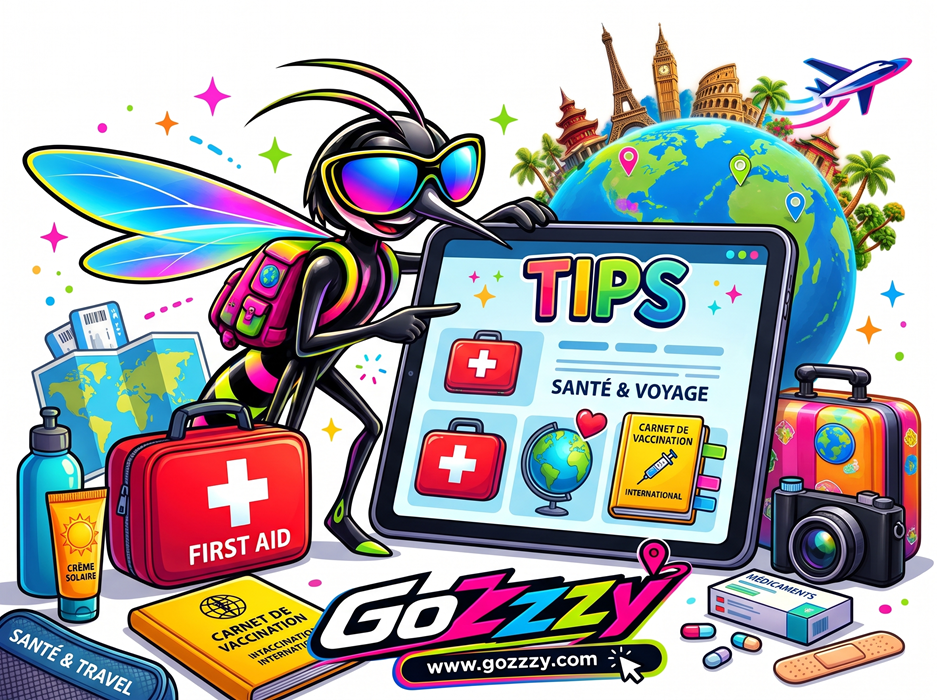
Planning a trip is an exciting adventure, but the success of a getaway to the other side of the world relies largely on a factor that is often overlooked: your health. Changing time zones, microbial environments, or climates puts a real strain on your body.
A successful trip is a well-anticipated trip. From mandatory vaccines to preventing digestive troubles, as well as looking after the well-being of your four-legged companion, here is the complete roadmap for setting off with peace of mind and a protected body.
Where to Get Information Before Departure?
Before packing your bags, the first step is to gather reliable and up-to-date health information about your destination. Hygiene rules, seasonal epidemics, and entry requirements vary from country to country, and even from region to region.
To find rigorous scientific advice, turn to the World Health Organization (WHO) as well as official national portals (such as your country’s Ministry of Foreign Affairs website or public health agencies). These platforms list vector-borne risks (dengue, malaria, zika) and local precautions to adopt.
In addition, the Gozzzy platform provides accessible support to help you structure your itinerary preparation. However, it is essential to keep in mind that Gozzzy offers practical help and directional guidance: this resource in no way replaces professional medical advice. Only a healthcare professional is qualified to assess your medical history, adjust a treatment, or prescribe a personalized prophylaxis.
Vaccines and International Vaccination Centers: Planning Ahead
Vaccines are your primary shield against many preventable diseases. Protection generally falls into two categories:
- Universal Vaccines: It is advisable to check that your routine vaccination schedule is up to date (Diphtheria, Tetanus, Polio, Pertussis, Measles).
- Travel-Specific Vaccines: Depending on the geographical area and type of stay (rural, urban, long-term), protection against yellow fever, hepatitis A, typhoid, rabies, or Japanese encephalitis may be required or strongly recommended.
In some cases, vaccination is a legal entry requirement. This is notably the case for the yellow fever vaccine, which is required to enter several territories in intertropical Africa or South America, or requested if you have transited through an endemic country. This specific vaccine must be administered at an authorized international vaccination center, which will issue an official yellow international certificate of vaccination.
Schedule an appointment ideally 4 to 6 weeks before departure. This time frame is essential to allow your immune system to build the necessary protective response and to space out any potential booster shots.
Understanding and Preventing « Tourista »
If there is one health inconvenience awaiting a majority of travelers, it is the famous tourista (or traveler’s diarrhea). Far from being an inevitability, this digestive trouble can be explained quite rationally.
Why Do We Get Sick from Drinking Local Water?
When you consume tap water or poorly washed food in another country, your digestive system comes into contact with bacterial strains (mainly Escherichia coli), viruses, or parasites to which you have never been exposed.
The local population drinks this water without any trouble because their gut microbiota has gradually adapted over the years. Your body, on the other hand, perceives these unfamiliar microorganisms as invaders. The defense reaction is immediate: intestinal mucosa inflammation, cramps, nausea, and diarrhea to eliminate the intruder as quickly as possible.
Golden Rules of Food Prevention
To protect your digestive system, follow a few simple rules based on common sense and international guidelines:
- Drink exclusively bottled or purified water (using disinfectant tablets or certified filters). Make sure the bottle is opened in front of you.
- Systematically refuse ice cubes, as they are often made from tap water.
- Prefer thoroughly cooked food served piping hot.
- Peel fresh fruits and vegetables yourself before eating them.
- Apply the fundamental hygiene rule: wash your hands frequently with soap or use a hand sanitizer before every meal and after being in public places.
Traveling Abroad with Your Pet
Traveling on an adventure with your dog or cat requires just as much health diligence. A poorly prepared trip can lead to holdups at customs or even costly quarantine measures for your pet.
Administrative and Medical Requirements
Within the European Union, your pet must hold an official EU Pet Passport, be microchipped, and be vaccinated against rabies. Note: the primary rabies vaccination requires a period of at least 21 days before it becomes legally valid for crossing borders.
For certain non-EU destinations, or when returning to your home country after visiting a high-risk area, a rabies antibody titration test (a blood test performed several weeks in advance to verify vaccine efficacy) is required. Additionally, some countries mandate the administration of a specific deworming treatment against echinococcus by a veterinarian shortly before arrival.
Protecting Your Pet’s Health on Site
Pets also feel the effects of a change in environment. During transport or walks, avoid letting your pet drink stagnant water or tap water if it is not safe for you to drink. Local bacteria or parasites can cause severe gastroenteritis in our animal companions.
Remember to consult your veterinarian before leaving to obtain antiparasitic treatments tailored to local risks. In the Mediterranean region or the tropics, insects transmit serious diseases such as leishmaniasis or heartworm disease (dirofilariasis). Applying appropriate collars or spot-on treatments will protect your pet throughout the trip.
Practical Tips for Assembling Your First-Aid Kit
A well-thought-out travel medical kit allows you to handle minor daily ailments quickly without stressing out. Here are the essential items to pack:
- Your regular medication: Bring sufficient quantities for the entire duration of your stay, plus a safety buffer in case of travel delays. Keep prescriptions written with active ingredient names in INN (International Nonproprietary Name / DCI).
- Digestive trouble remedies: Oral rehydration salts (ORS), an antidiarrheal, an antispasmodic, and anti-nausea medication.
- Basic pain relief: Stick to paracetamol (acetaminophen). Avoid self-medicating with anti-inflammatory drugs or aspirin in areas where dengue fever is present.
- Skin protection: Broad-spectrum sunscreen, soothing cream for minor burns, and an insect repellent suitable for tropical areas.
- First-aid supplies: Antiseptic, sterile gauze pads, waterproof bandages, supportive bandage tape, scissors, and tweezers (or a tick remover tool).
Setting Off with Peace of Mind Through Thorough Preparation
Health alerts and hygiene instructions should not ruin your fun or create unnecessary worry. Our bodies have a remarkable capacity to adapt, and the vast majority of trips go smoothly without any health issues.
By adopting simple habits—updating your vaccines, checking drinking water safety, taking care of your pets, and having your choices validated by a doctor—you give yourself the best chance of enjoying an unforgettable experience. Good preparation is not a constraint; it is the key to your freedom on the open road.


 EXPLORE

 EXPLORE

 EXPLORE

 EXPLORE