 EXPLORE
Located in the heart of Europe, Belgium is a concentrate of charm, culture, and hospitality. Despite its modest size, this fascinating country offers an incredible diversity of landscapes and experiences. From medieval cities lined with canals to the wild forests of the Ardennes, along with a vibrant art scene and a world-famous culinary culture, Belgium is the ideal destination for a long weekend or an unforgettable vacation.
A Rich History at the Crossroads of Europe
The history of Belgium is defined by its strategic location, which over the centuries made it a major cultural and commercial hub, as well as the stage for major European conflicts.
Successively attached to the Roman and Carolingian empires, the region flourished in the Middle Ages thanks to the prosperity of the Dukes of Burgundy and Flemish trading posts. Bruges, Ghent, and Brussels rivaled each other in wealth, as evidenced today by the Belfries and cloth halls built during that era.
After periods of Spanish, Austrian, French, and Dutch rule, the Kingdom of Belgium declared its independence in 1830. The country became a pioneer of the Industrial Revolution on the continent before establishing itself, in the 20th century, as the birthplace of European institutions and comic books.
Brussels: A Cosmopolitan and Vibrant Capital
Capital of Belgium and seat of the European Union institutions, Brussels is a multifaceted city where historical heritage meets bold modernity.
Iconic Landmarks
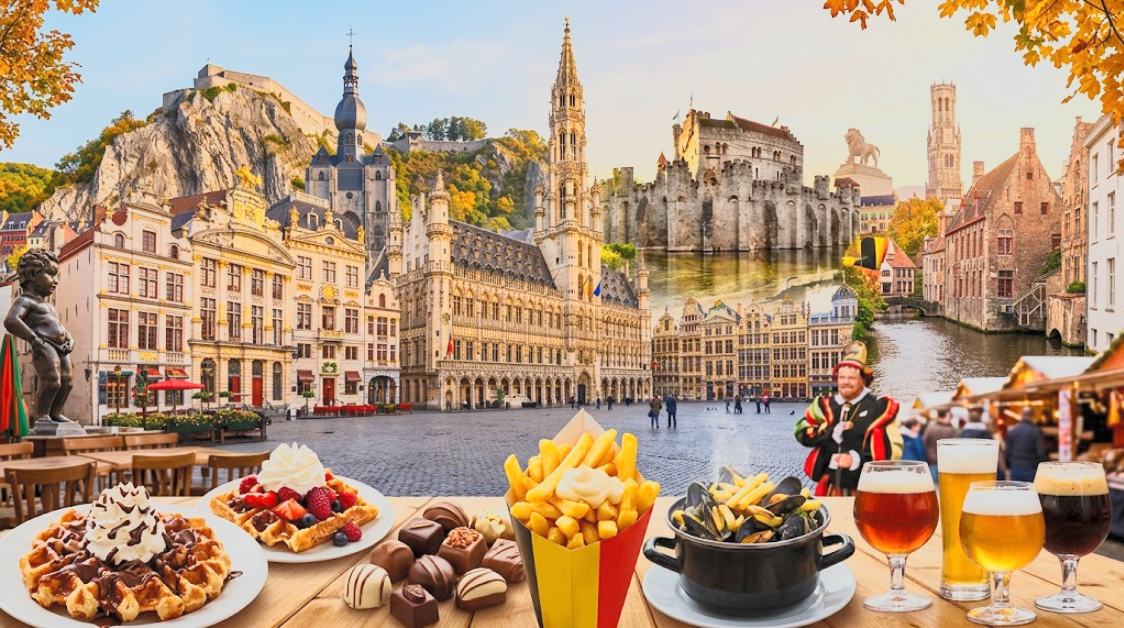
- Grand-Place: A UNESCO World Heritage site, this square is considered one of the most beautiful in the world thanks to its gilded guildhalls and imposing Gothic Town Hall.
- Manneken-Pis: This famous small bronze statue of a urinating boy has become the emblem of Brussels’ unique sense of humor and local zwanze.
- The Atomium: An iconic monument created for the 1958 World Fair (Expo 58), this giant structure representing an iron crystal offers impressive panoramic views over the entire Brussels region.
Culture and Lifestyle
Brussels also shines with its Art Nouveau facades designed by Victor Horta, its comic strip mural trail (Tintin, Asterix, The Smurfs), and its world-class museums, such as the Magritte Museum and the Royal Museums of Fine Arts.
Must-See Places to Visit in Belgium
Beyond its capital, Belgium is packed with historic towns and natural gems spread across Flanders in the north and Wallonia in the south.
Bruges, the Venice of the North
With its cobbled streets, red-brick houses, and romantic canals, Bruges is a must-visit stop. Climb to the top of the Belfry for a panoramic view of the city, visit the preserved Beguinage, and treat yourself to a boat ride along the waterways.
Ghent, the Gothic Gem
Less touristy yet equally captivating, Ghent combines a lively student atmosphere with a striking medieval heritage. Don’t miss the Castle of the Counts of Flanders and Saint Bavo’s Cathedral, home to the famous Adoration of the Mystic Lamb altarpiece by the Van Eyck brothers.
Antwerp, Diamond and Fashion Capital
Belgium’s second-largest city, Antwerp charms visitors with its busy port, world-famous diamond district, and monumental Central Station. Culture enthusiasts will love visiting Rubenshuis (Rubens House) and the city’s many fashion designer boutiques.
Dinant and the Meuse Valley
Nestled between a cliff and the river in Wallonia, Dinant offers a picture-postcard setting with its Collegiate Church of Our Lady and Citadel overlooking the Meuse. It is also the birthplace of Adolphe Sax, inventor of the saxophone.
The Ardennes and High Fagnes Nature Park
For nature lovers, the south and east of the country feature vast forest massifs, winding rivers, and picturesque towns such as Bouillon or Durbuy. The High Fagnes (Hautes Fagnes) feature unique landscapes of bogs and wild moors.
Belgian Gastronomy: A Gourmet Art of Living
Belgian cuisine is generous, hearty, and comforting. It blends French finesse with Northern European indulgence.
Traditional Dishes
- Carbonnade Flamande: A beef stew slowly simmered in dark beer with gingerbread and mustard.
- Mussels and Fries (Moules-Frites): The ultimate national dish, featuring fresh mussels cooked with white wine, celery, or cream, served with golden fries.
- Waterzooi: Originating from Ghent, this rich, creamy broth with vegetables is prepared with chicken or fish.
- Liège Meatballs (Boulets à la Liégeoise): Meatballs served in a sweet and savory sauce made with Liège syrup (raisin and apple molasses) and onions.
- Stoemp: A potato mash mixed with seasonal vegetables (carrots, leeks, cabbage) served with sausage.
Sweet Treats & Street Food
- Belgian Fries: Traditionally double-fried in beef tallow, fries are enjoyed in a cone from a friterie or fritkot with a wide selection of sauces.
- Waffles: The Brussels waffle is rectangular, light, and crispy, while the Liège waffle is denser, brioche-like, and caramelized with pearl sugar.
- Belgian Chocolate: Belgian chocolatiers and pralines enjoy global renown thanks to the quality of their cocoa butter and artisanal craftsmanship.
Beer Culture
Recognized on UNESCO’s Intangible Cultural Heritage list, Belgian beer culture boasts thousands of varieties. From Trappist beers brewed in monasteries to sour, spontaneously fermented beers like Geuze or Lambic, every tasting is a culinary journey.
What to Do in Belgium: Unforgettable Activities
- Cruise the canals of Bruges or Ghent to appreciate medieval architecture from a fresh perspective.
- Follow the Beer and Abbey Route to discover historical breweries and artisanal brewing secrets.
- Go hiking or kayaking in the Ardennes, particularly along the Ourthe or Semois rivers.
- Ride the Coastal Tram (Kusttram), the longest tram line in the world, running along the entire Belgian coastline from De Panne to Knokke.
- Explore the Caves of Han Estate, a magnificent underground network located in Belgium’s first nature reserve.
- Experience traditional folklore festivals, such as the Carnival of Binche with its Gilles and wax masks (UNESCO-recognized) or the historic Ducasses of Mons and Ath.
Practical Tips for Your Trip
Best Time to Visit
Belgium can be visited year-round. From spring to early autumn (April to October), the weather is pleasant for exploring cities and natural parks. In December, festive Christmas markets transform Brussels, Bruges, and Liège into enchanting winter wonderlands.
Getting Around
Belgium’s train network is fast, dense, and efficient. By train, it rarely takes more than an hour to travel from Brussels to Bruges, Ghent, Antwerp, or Namur, making the country easy to explore without a car.

 Buy on Amazon fr


 FOOD
 SPOTLIGHT
 EXPLORE