
 EXPLORE
Journey to the Heart of Malta: The Mediterranean’s Secret Gem of History, Wild Landscapes, and Sweet Living
Set amidst the turquoise waters of the central Mediterranean, the Maltese archipelago exudes an enchanting charm. Just a few hours’ flight from major European capitals, this island nation—comprising Malta, Gozo, and Comino—offers a striking blend of dramatic landscapes, architectural treasures, and a unique lifestyle. Shaped by seven millennia of cultural fusion, this small country with a grand heritage appeals equally to history buffs, lovers of raw nature, and epicureans in search of sunshine.
The Maltese Way of Life: Mediterranean Sweetness and the Art of Slowing Down
If Malta captivates from the very first moment, it is above all due to its radiant atmosphere. Boasting over 300 days of sunshine a year, the archipelago lives by the rhythm of the golden light that shapes the local limestone—globigerina—so characteristic of local facades. Here, time seems to adopt a gentler tempo, inviting visitors to unwind.
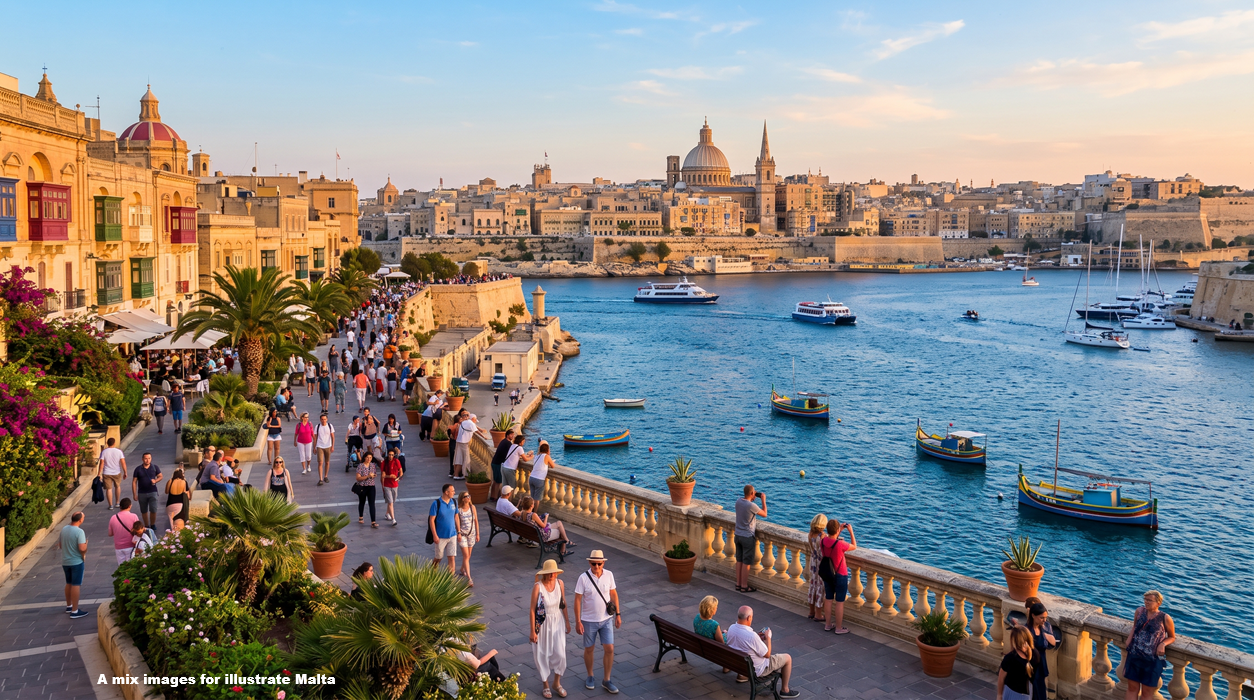
The Maltese art of living draws its strength from genuine warmth. Whether sharing a drink on a shaded square, listening to the gentle lapping of waves in a fishing harbor, or strolling at sunset along the coastal promenades of Sliema or Marsaskala, every moment encourages contemplation. Renowned for their warm hospitality, the locals cultivate a sense of welcome that makes every visitor feel immediately at home.
This island spirit is particularly felt during the late afternoon pause, when outdoor terraces come alive around a glass of Kinnie—the iconic local carbonated drink infused with bitter orange peel and aromatic herbs—or a glass of wine produced on the sunny slopes of Gozo.
An Open-Air Museum: 7,000 Years of Thrilling History
The history of Malta can be read like an open book on every cliff face and around every street corner. Ideally situated at the crossroads of maritime routes between Europe, North Africa, and the Middle East, the archipelago was coveted by the greatest civilizations in history: Phoenicians, Romans, Byzantines, Arabs, Normans, Knights of St. John, the French, and later the British.
« Malta does not simply possess historical monuments: the entire island is a monument where every stone tells an epic tale. »
Among the most fascinating treasures are the megalithic temples, such as Ġgantija in Gozo or Ħaġar Qim and Mnajdra on the main island. Built between 3600 and 2500 BCE, these sanctuaries predate the Egyptian pyramids and Stonehenge. Not far away, the Ħal Saflieni Hypogeum, a subterranean necropolis carved across three levels, stands as a masterpiece of prehistoric engineering and a UNESCO World Heritage site.
However, the island’s golden architectural age remains intrinsically tied to the Knights of the Order of St. John. Arriving in 1530, these visionary builders erected mighty citadels, impregnable forts, and Baroque masterpieces to safeguard Christendom during the Great Siege of 1565.
Must-Visit Cities: Jewels of Architecture and Golden Stone
Valletta: The Majestic Capital of the Knights
Founded in 1566 by Grand Master Jean Parisot de Valette, Valletta boasts one of the highest concentrations of historical sights in the world. Enclosed within magnificent ramparts overlooking the Grand Harbour, the capital charms with its grid-pattern streets lined with colorful wooden balconies known as gallariji.
An absolute must-see, St. John’s Co-Cathedral conceals behind an austere façade a dazzling Baroque interior dripping with gold and polychrome marble. It houses Caravaggio’s masterpiece, The Beheading of Saint John the Baptist. After this cultural immersion, the Upper Barrakka Gardens offer breathtaking panoramic views of the harbor and neighboring fortifications.
Mdina: The Silent City
The ancient capital of the island, perched on a rocky promontory in the heart of the country, Mdina feels suspended in time. Nicknamed « The Silent City, » this fortified town with medieval lanes and aristocratic palaces bans visitor vehicle traffic.
Strolling through Mdina at dusk, when street lamps illuminate the blonde limestone buildings, is an almost mystical experience. Just outside the city walls lies Rabat, famous for its Early Christian St. Paul’s Catacombs.
The Three Cities: The Maritime Cradle
Facing Valletta stand Vittoriosa (Birgu), Senglea (L-Isla), and Cospicua (Bormla). Less frequented than the capital, these three fortified towns offer an authentic glimpse into the archipelago’s seafaring past. Wandering along Birgu’s marina or climbing to the top of Fort St. Angelo yields exceptional viewpoints alongside a taste of tranquil local life.
Spectacular Landscapes: Between Turquoise Seas and Dramatic Cliffs
The Maltese archipelago delights with its diverse natural landscapes condensed into an intimate area. Malta’s southern coast features imposing limestone cliffs sheerly dropping into the sea. The Dingli Cliffs, the island’s highest point at over 250 meters above sea level, provide the perfect spot to watch the sunset over the endless horizon.
Nearby, the Blue Grotto puts on a magical show as sunlight streams through a massive natural arch, tinting the water with cobalt and emerald hues.
Nestled between Malta and Gozo lies the tiny islet of Comino. Virtually uninhabited, it harbors the world-famous Blue Lagoon. With its white sandy seabed and crystal-clear turquoise waters reminiscent of the Caribbean, it is a haven for swimming, sea kayaking, and snorkeling.
Gozo: The Wild and Pastoral Sister Island
Accessible via a 20-minute ferry ride, the island of Gozo offers a delightfully idyllic escape. Greener, more undulating, and quieter than its larger sibling, Gozo is a paradise for hikers and lovers of unspoiled nature.
Not to be missed on Gozo:
- Victoria (Rabat) and its Citadel: A beautifully restored fortress commanding 360-degree views across the entire island.
- The Marsalforn Salt Pans: A giant checkerboard carved into the coastal rock where salt has been harvested traditionally since Roman times.
- Ramla Bay: A unique beach celebrated for its reddish-gold sand and the legendary Calypso’s Cave above.
- Wied il-Għasri: A narrow sea canyon winding between soaring cliffs, ideal for a memorable swim.
Culinary Escape: Maltese Cuisine, Reflection of a Rich Cultural Tapestry
A direct result of its geographical position, Maltese cuisine is a mouthwatering fusion of Mediterranean traditions, blending Sicilian influences, Arab culinary principles, and British touches. It is a generous, rustic, and authentic gastronomy centered on fresh land and sea produce.
Essential Maltese Delicacies
- Pastizz (plural: Pastizzi): The undisputed king of local street food. This flaky, ultra-crispy pastry is traditionally filled with fresh ricotta or spiced mushy peas.
- Stuffat tal-Fenek: Traditional rabbit stew slow-cooked in a rich sauce of red wine, garlic, tomatoes, and aromatic herbs. It is the national dish, traditionally reserved for Sunday family feasts.
- Ftira: A traditional round ring-shaped bread with a golden, airy crust, topped or stuffed with olive oil, fresh tomatoes, capers, olives, tuna, and local sheep’s milk cheese (ġbejna).
- Fresh Seafood in Marsaxlokk: Every Sunday morning, the colorful fishing village of Marsaxlokk hosts a vibrant fish market. It is the perfect place to savor Lampuki (mahi-mahi) cooked in a savory pie or simply grilled over open flames.
Living Culture, Traditions, and Island Secrets
Malta’s cultural wealth is also expressed through its national language: Maltese (Malti). As the only Semitic language written in the Latin alphabet and an official language of the European Union, it reflects the country’s multicultural history, combining Arabic roots with a rich vocabulary borrowed from Italian, Sicilian, and English.
The Magic of Local Festas
Between May and September, the archipelago comes alive with local village festas. Each parish celebrates its patron saint with brass bands in the streets, lavish decorations, religious processions, and spectacular fireworks displays that rival each other in creativity. Joining a festa offers an unmatched glimpse into the devotion and festive spirit of the Maltese people.
A Haven for Cinema and Scuba Diving
Thanks to its dramatic scenery and well-preserved architecture, Malta is a favored open-air film set for Hollywood. From Gladiator to Game of Thrones, Troy, and Popeye (whose wooden film set still stands in Anchor Bay), countless international productions have filmed here.
For scuba diving enthusiasts, Malta ranks among the top diving destinations in Europe. Its waters offer exceptional visibility, mesmerizing underwater caves, and an impressive network of shipwrecks and WWII aircraft.
Practical Guide for a Successful Trip to Malta
- When to Visit? The archipelago is a year-round destination. Spring (April to June) and autumn (September to November) offer ideal temperatures for combining sightseeing, hiking, and swimming without the peak summer crowds.
- Getting Around: Public buses serve every village on the island. However, renting a car or using ride-hailing apps provides greater flexibility. Note: driving is on the left side of the road, a lasting British legacy!
- Recommended Stay: A 5- to 7-day stay is ideal to explore Malta’s top highlights, take a day trip to Comino, and dedicate at least two days to discovering Gozo.
Between its awe-inspiring heritage, luminous natural scenery, and Mediterranean warmth, Malta stands out as a captivating destination where every corner turned promises an unforgettable discovery.

 EXPLORE
 EXPLORE

 EXPLORE